There are things you buy. And there are things that just happen to you.
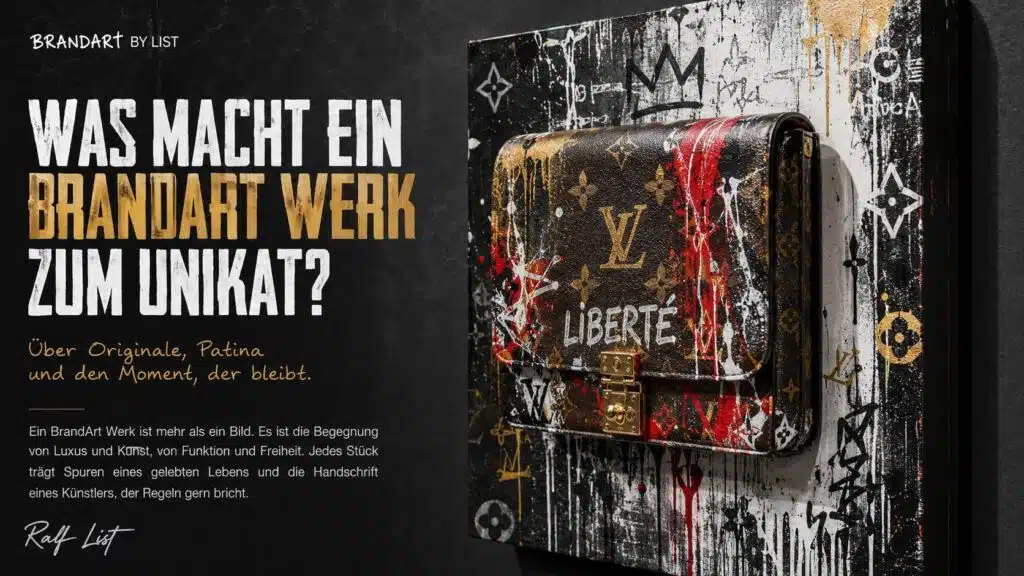
To me, a BrandArt piece belongs to the second category. It’s not a product that rolls off an assembly line. It’s not an accessory waiting to be neatly displayed in a showcase. It’s a clash—between luxury and life, between brand and opinion, between possession and liberation.
Many people ask me: What actually makes a BrandArt piece one-of-a-kind?
The simple answer would be: There is only one copy of each work.
But that wouldn't be enough for me. A one-of-a-kind item isn't just a number. A "One-of-a-kind" is a state of being.
The property wasn't vacant even before that
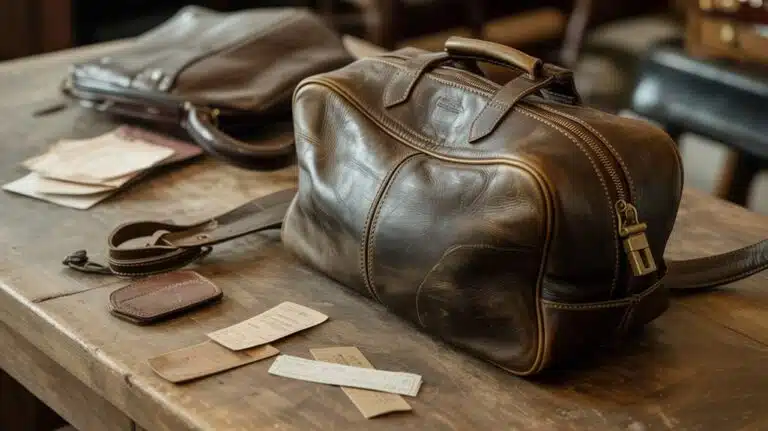
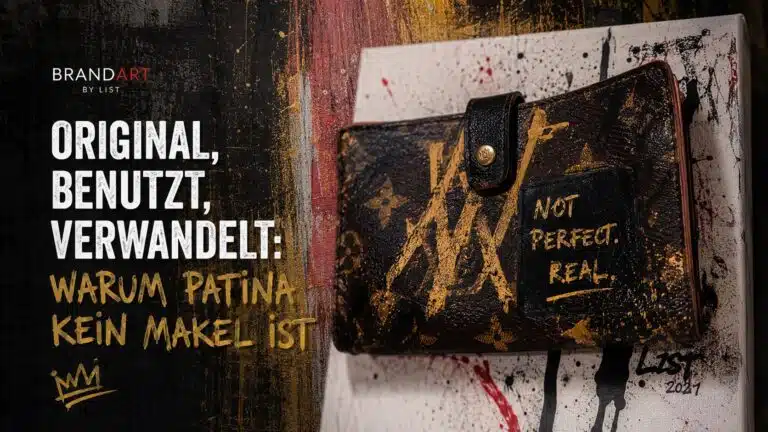
I work with genuine luxury items. Bags, wallets, accessories—things that once served a specific purpose. They were carried, used, loved, and perhaps even forgotten. Some come with small signs of wear: a crease, a scuff, a discoloration—a memory that no one can quite explain anymore.
A new object often tells us nothing more than its price. A used object tells a story of life. And that’s exactly where art begins for me—not in perfect splendor, but in the moment when an object ceases to be merely an object.
Luxury Often wants to appear flawless. Art is allowed to be imperfect.
Maybe she even has to.
The brand is here to stay, but it's facing headwinds
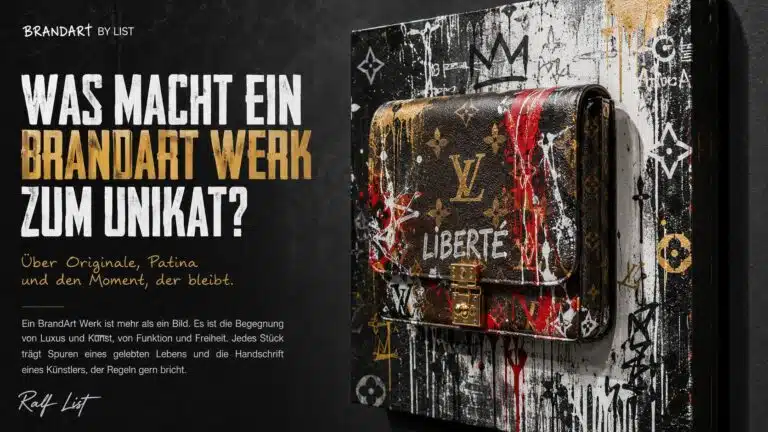
Of course, with many BrandArt pieces, you can still see the object's original source. Louis Vuitton, Prada, Gucci, or other brands that everyone recognizes immediately. These logos aren't just little patterns. They are cultural symbols. They speak to status, desire, consumption, social climbing, security, and sometimes even a fair amount of insecurity.
I'm not interested in simply decorating a brand. I'm interested in the moment when the logo loses its dominance.
The brand is still here. But it no longer reigns.
Color is added. Canvas is added. Gesture is added. Humor is added. Sometimes even a bit of noise. A luxury object doesn't become an even more luxurious luxury object. It becomes something else. Something freer.
For me, that's exactly the point.
The screen is not a backdrop. It is a stage.
At BrandArt, it's not just about slapping a bag onto a canvas somewhere. The canvas isn't just a decorative backdrop. It's the space where the object takes on new meaning.
I see the screen as a stage.
The object appears. It’s no longer in the closet. It isn’t just hanging on the wall by chance. It confronts the viewer head-on. Suddenly, you have to take a stance. Is this still fashion? Is this already art? Is it okay to wear this? Is it okay to touch this? Is it okay for luxury to be this loud?
Good art doesn't answer everything. It asks better questions.
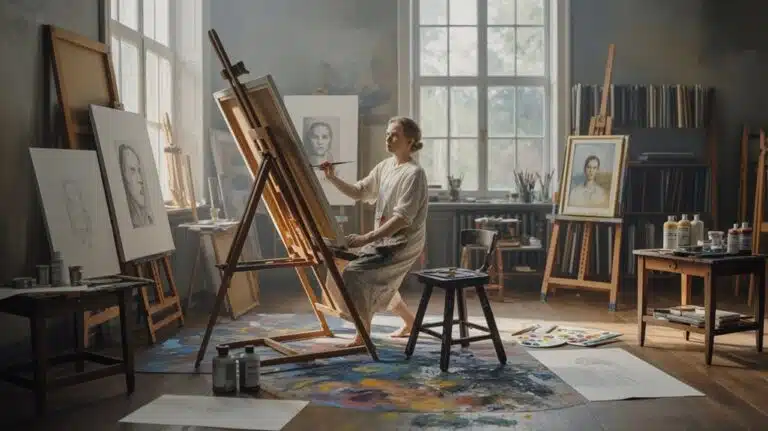
Each canvas emerges from the object itself—color, rhythm, material, tension, composition. This isn’t a formula I apply to every piece. It’s a dialogue. Sometimes it’s unruly. Sometimes it’s surprising. Sometimes, even I don’t know exactly where it will end when I start.
That's important. Because if I already knew the result in its entirety beforehand, it wouldn't be art. Then it would just be production.
My handwriting is part of the work
A BrandArt piece bears the marks of handcrafted work. And yes, those marks are meant to be seen.
I don't like art that pretends to have no origins. Every stroke, every layer, every decision remains in the work. Even the quick decisions. Perhaps especially those. Because that's where the energy lies—in that small risk that arises when you don't control everything.
I don't want a surface that's just clean. I want a surface that's alive.
That’s why every piece I create is also shaped by my own perspective. I don’t come from a world where luxury was revered with awe. I come more from a background where you try things out, take them apart, put them back together, and see if something unique emerges.
To me, BrandArt isn't about bowing down to luxury. Nor is it about mindless destruction. It's a game with power. With value. With taste. With what people want to show and what they might be hiding.
You can't reorder a truly one-of-a-kind item
You can revisit a theme. You can work with similar styles. You can vary the colors. But the same work will never be created again.
Why?
Because the subject would be different. The traces would be different. The mood would be different. The day would be different. My hand would be different. Even if I wanted to, I couldn't replicate that moment.
And that's exactly what it's all about.
A BrandArt work is not unique simply because I say so. It is unique because its creation cannot be replicated. It consists of a specific object, a specific canvas, a specific decision, and a specific moment.
That might sound romantic, but it's actually quite practical.
After all, a collector doesn't just buy material objects. He buys provenance. Attitude. Artistic style. History. And, in the best-case scenario, a work that won't let him rest.
The certificate confirms what the plant has long been
Of course, the formal aspects are also part of a BrandArt work: signature, work details, certificate of authenticity, and documentation. This is important because collectors need clarity.
But a certificate doesn't bring a work to life.
It just confirms what has already happened.
True value isn't created on paper. It arises through transformation—the moment a luxury item sheds its old role and takes on a new one. Not as a bag. Not as a status symbol. Not as a mere possession.
But rather as a work of art.
Why this interests me
Maybe because I've never had much respect for rigid categories.
A bag belongs in the closet. A picture belongs on the wall. Luxury belongs in the store. Art belongs in the gallery. Everything is neatly organized.
That bores me.
I like the gray areas. Where things are no longer clear-cut. Where a wallet suddenly says more than a neatly framed picture. Where a brand doesn’t disappear, but its meaning shifts. Where someone stands in front of a work of art and smiles, is puzzled, or wonders why this thing is occupying their thoughts more than they had expected.
For me, a BrandArt piece is exactly this space in between.
It is both an object and an image. Luxury and commentary. Possession and liberation. Memory and the present. It can be worn, but not just anyhow. It can be displayed, but not in a conventional way.
And in the end, it is one thing above all else: it cannot be repeated.
That's why it's one of a kind.
This text and these images were generated using artificial intelligence (AI). In the interest of transparency and in accordance with the standards of the EU AI Regulation, we would like to point out that the content was subsequently subjected to careful editorial review and human verification. The publisher bears the final editorial responsibility.
Important noteIt is expressly pointed out that the products presented on this website are pure works of art (unique pieces) and not fashion items. They are the result of an artistic transformation and are subject to the artistic freedom of the artist. No brand advertising or an official impression of the manufacturer is created. The works are clearly artistically altered as original products and are not labeled as official "brand/logo products".
To provide you with an optimal experience, we use technologies such as cookies to store and/or access device information. If you consent to these technologies, we may process data such as browsing behavior or unique IDs on this website. If you do not give or withdraw your consent, certain features and functions may be impaired.
Functional
Always active
The technical storage or access is strictly necessary for the legitimate purpose of enabling the use of a specific service expressly requested by the subscriber or user, or for the sole purpose of carrying out the transmission of a communication over an electronic communications network.
Preferences
The technical storage or access is necessary for the legitimate purpose of storing preferences that have not been requested by the subscriber or user.
Statistics
Technical storage or access for statistical purposes only.Technical storage or access used solely for anonymous statistical purposes. Without a subpoena, the voluntary consent of your Internet service provider or additional records from third parties, the information stored or accessed for this purpose alone cannot generally be used to identify you.
Marketing
The technical storage or access is necessary to create user profiles, to send advertising or to track the user on a website or across several websites for similar marketing purposes.
Your e-mail address or WhatsApp number will only be used to send you our newsletter and information about the activities of BrandArt by List. You can unsubscribe at any time using the unsubscribe link in the newsletter.
 German
  English
 Spanish
 French