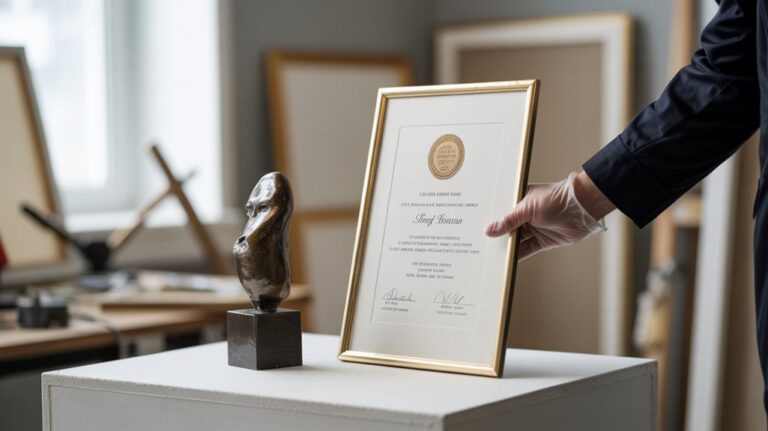
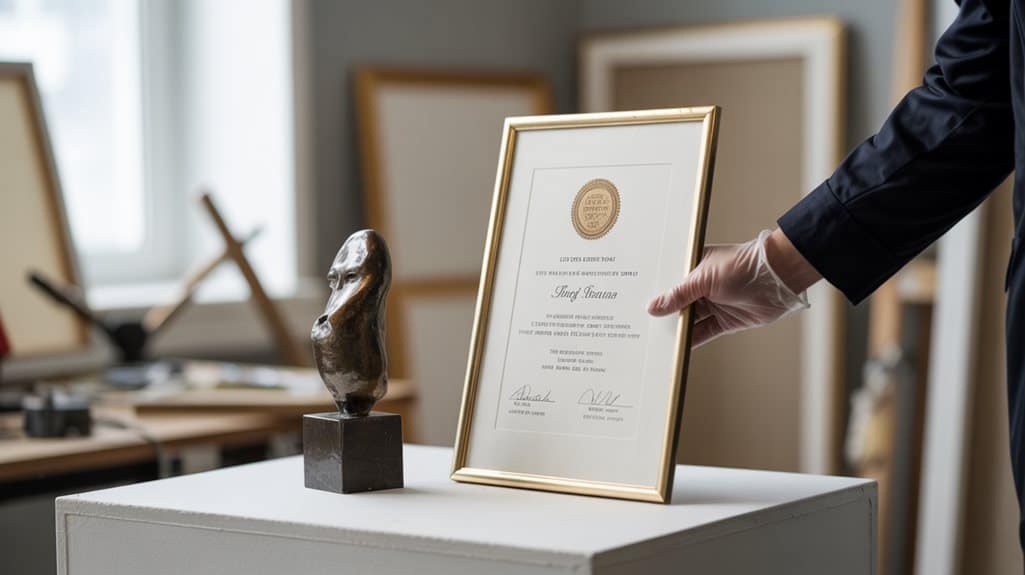
A Certificate of Authenticity mention my name, date the work, and document its origin in a verifiable record—insurance, resale, Provenance, all covered. But it never made the brushstroke. It never decided to press a vintage Louis Vuitton bag against raw canvas or transform a Hermès silhouette into something that silences a room. The certificate follows art; it doesn't create it. Keep going—we'll get into how it all works later.
A certificate of authenticity impresses accountants, No images. It confirms the origin, but it creates no composition, no tension, no soul. In BrandArt by LIST is formed Original Art demonstrate by brushstroke, Concept and decision—not a piece of paper in an envelope.
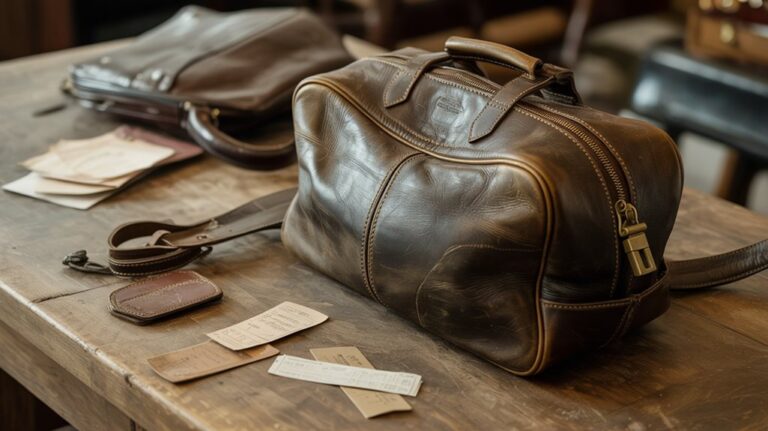
Imagine this: a Louis Vuitton bag meets a hand-painted canvas. Adrenaline meets elegance. Asphalt meets hardwood floors. The work comes to life through texture, through color, through the deliberate collision of Hermès Leather and urban imagery. Art certificates can build trust—but trust isn’t a brushstroke, a shading, or courage.
The actual transformation takes place on the surface, within the material, at the moment of decision. A Prada Bag becomes the vessel of a story. Dior leather becomes the canvas for a manifesto. Certificate of Authenticity for Art It documents the result—but the work, the technique, the expression: that is irreplaceable, unique, and alive.
A certificate of authenticity does three things at once: It say my name, names the work, and links the two inseparably—like canvas and leather.
It gives the owner a document that counts when it really matters— with the insurance company, when reselling, or when providing proof to a gallery or auction house.
This isn't just bureaucratic red tape; it's reality's signature on a work that already exists somewhere between the street and a display case.
The certificate of authenticity is not a bureaucratic formality—it is the signature of a moment, proof that this particular work exists, exactly as it is, right here.
With the BrandArt certificate, each document bears the name Ralf List, not as a formality, but as a commitment.
Authorship, title, materials, dimensions, year of creation—these details aren’t just bureaucratic formalities; they are coordinates. They situate the work in the space between asphalt and hardwood floors, between Louis Vuitton leather and raw canvas.
The Provenance The story of a work of art doesn't begin with its resale—it begins right here, with this certificate, this number, and this photo.
Vague descriptions are misleading. Precision speaks for itself. A one-of-a-kind BrandArt piece—whether Hermès, Prada or Dior – deserves a classification that stands the test of time: distinct, unmistakable, one-of-a-kind.
Anyone who owns a one-of-a-kind BrandArt piece owns more than just canvas and leather—they own a moment, frozen in time, certified, and irreplaceable.
The Certificate of Authenticity is not a supplement. It is Evidence, Archives, Armor. It defines what the work is: medium, format, Date Created, Edition – documented, precise, indisputable.
For Insurance It becomes the key identification document that, in the event of damage, helps establish ownership when memory fails.
At the Resale —whether it’s a one-of-a-kind Louis Vuitton piece, a Hermès creation, or a Prada item from List—it protects both buyers and sellers from doubt and deception.
It reduces risk. It builds trust. It makes the intangible tangible.
Art lives on in the artwork itself. The certificate ensures its survival—in collections, transactions, and across generations.
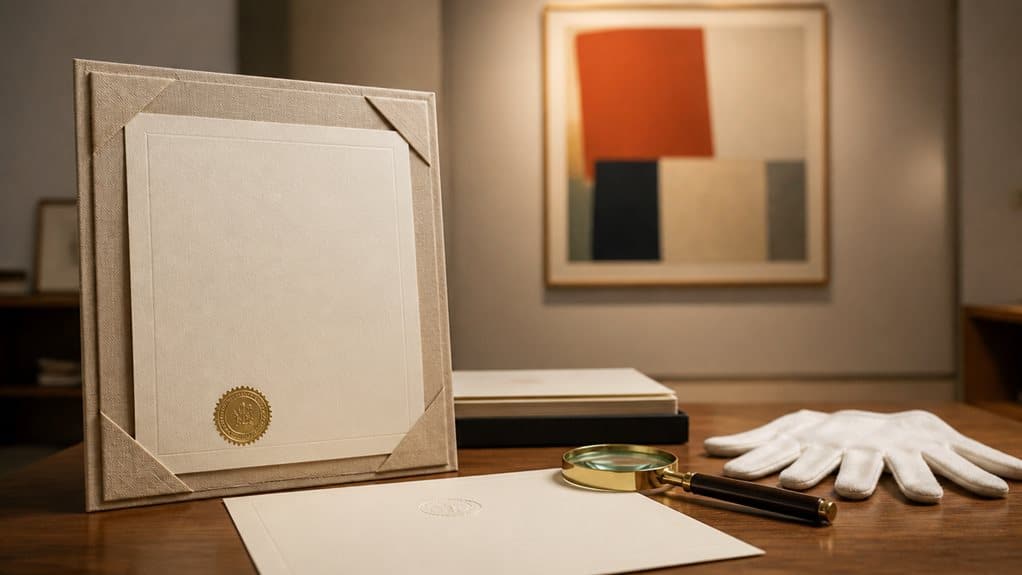
For a certificate to be more than just a piece of paper—to become the voice of the work—it must speak—precisely, completely, and unmistakably.
It bears the the author's full name, the title, and the year it was created.
Technology, materials, dimensions—everything is documented; nothing is left to chance.
Every one-of-a-kind BrandArt piece from LIST—whether it’s a transformed Louis Vuitton, a reinterpreted Hermès, or a Prada that takes on the asphalt instead of the hardwood floor—deserves a Certificate Number, a certificate of authenticity, an official stamp.
The handwritten signature It is not merely an ornament. It is a commitment, proof, and a bond.
These include Place of Origin, date of issue, the artist's contact information—because a work of art lives on long after it is first encountered.
Provenance protects. Documentation liberates.
A Photo of the factory completes the picture for insurance purposes, for the archive, and for the next owner, who will understand what they have in their hands: A one-of-a-kind 1/1 piece, no copies, no compromises.
A certificate doesn't create art—that was never its purpose. It's the paper behind the pulse, The Silent Witness what hands and vision have already accomplished. BrandArt by LIST transforms a Louis Vuitton, a Hermès, a Prada—items that have long since been mythologized—into Unique, vibrant statements. The certificate will follow. It never leads.
This is what the document actually does:
But understand this: Art was born At the very moment when List Pigment pressed against leather and linen, when asphalt met hardwood floors, when rebellion found elegance. The certificate simply reiterates what the work has already conveyed.
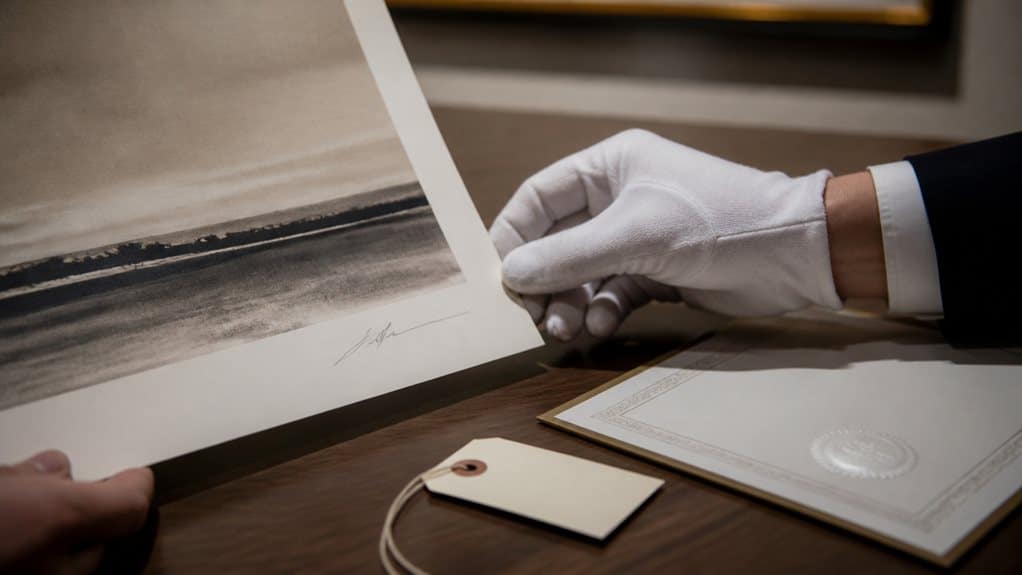
Call number, Serial Number, Certificate – These aren't just bureaucratic formalities; they are the backbone, the pulse, and the voice of a work that cannot be called into question.
I treat every BrandArt piece—a Louis Vuitton canvas reclaimed from commercialism, a Hermès leather piece reborn under my hand—as a complete document in its own right, in which each mark reinforces the next.
When the signature, number, and certificate all align, the work not only exists; it bears witness to itself.
Anyone who holds a BrandArt piece by LIST in their hands is holding three intertwined truths at once: the A Signature as a Living Fingerprint, the Serial number as a precise anchor, the Certificate as written proof.
None of these truths stands alone. A signature without a number remains vulnerable—ink can be imitated, but identity cannot.
The serial number links the physical object—whether a Hermès Birkin or a Louis Vuitton Toile—to a documented entry that Origin and Individuality occupied at the same time.
The certificate brings everything full circle: It combines the title, technique, dimensions, and date of creation into a single verifiable overall record. Only when all three elements come together does a robust audit trail emerge—from the street to the gallery, from the raw brushstroke to the documented icon.
Authenticity is not a matter of chance. It is architecture.
Architecture only works if every level speaks the same language – Signature, Work Number, Certificate: three votes, an indisputable verdict.
If my serial number on the certificate matches the entry in the Catalogue Raisonné matches, then no gap, through which doubt can seep in. No crack. No room for imitation.
One Louis Vuitton Bag, transformed into a canvas, bears history on its surface—and this history must remain completely legible, from the asphalt all the way to the Auction House.
Collectors, insurers, dealers: they all read the same chain of documentation as if it were a floor plan. Any inconsistencies in it are like broken beams—the whole thing collapses.
Consistency is not bureaucracy. It is integrity, set in stone.
With BrandArt by LIST That means: every detail is carefully coordinated, every piece of information is reliable—because true freedom is built on a solid foundation.
A Certificate tells you what I signed—not whether it moves you.
Artistic quality can't be certified: it either hits you in the gut, on the street, in the mirror—or not at all.
And what a work is worth tomorrow is determined neither by paper nor by a stamp—but by the world that changes around it.
Although a Certificate of Authenticity If the origin of a work is established beyond a shadow of a doubt, this proves neither its impact nor its expression nor its artistic relevance. It merely identifies Origin—not Power.
A Hermès Birkin A certificate guarantees its authenticity; whether it is transformed into a canvas, sparks thoughts, or renegotiates identity—the certificate never determines that.
With BrandArt by LIST merge Canvas and Louis Vuitton, Prada leather and brushstrokes, Dior elegance and the energy of the asphalt—all coming together to create something that breathes.
Artistic quality is multifaceted: design, coherence, a distinctive voice, and original form. Personal taste whispers what appeals to us—quality responds to what endures. Both are real; both are limited.
What matters is whether a work unleashes forces that move, transform, and challenge the viewer. Authenticity is essential. Art Is Consistency.
Artistic quality endures—that's a fact. But a Certificate? It confirms one's origins, not one's fate.
No document can turn a piece of Louis Vuitton canvas or Hermès leather into tomorrow’s auction record—that’s up to the market, raw and indifferent. Provenance, Exhibition history, cultural significance: these are the true architects of value. A certificate opens doors; it doesn't build the space.
Prada recontextualized, Dior reimagined – BrandArt by LIST lives where asphalt meets hardwood floors, where the hustle and bustle of the street meets the sophistication of the gallery.
The work derives its value from its rarity, from a sense of longing, and from the magnetic allure of something unique 1/1-Artworks. No piece of paper can guarantee this passion. Certificates merely document it. The markets decide. Art itself—multifaceted, rebellious, vibrant—that is what endures.
Anyone who has a BrandArt One-of-a-Kind has—one Genuine Hermès bag, the Ralf List has transformed into something unique—holds not only leather and paint in their hands, but a promise made of pigment and Provenance. Object art doesn't lie, but it can be misinterpreted. Falsified. Concealed.
That's exactly where the Certificate About the weapon, not the bureaucracy. It refers to the work, the hand that created it, and the history it embodies. A Painted Louis Vuitton It is not a reproduction—it is unique, radical, and unrepeatable. The document guarantees this claim: to insurance companies, dealers, and future collectors.
Prada, Dior, Hermès—these names carry a lot of weight. When List transforms them, something new emerges: asphalt over hardwood floors, the street meets the salon. Documenting this moment means preserving it—for the original owner, the market, and history. Provenance is memory. And memory is value.
A Certificate It doesn't lie—but it leaves out the essentials. It mentions the name, the technology, and the year. Origin, documented. Authorship, confirmed. Meaning? Silence.
The document is not a judgment—it’s a fingerprint, not a verdict. It tells you that this canvas, this Hermès Birkin, this Louis Vuitton bag was created by Ralf List’s hand. It doesn’t tell you why it moves you, changes your walls, or shifts your identity.
With BrandArt by LIST The certificate contains the facts – Dimensions, print run, call number – while the work itself poses the questions. Prada alongside "Asphalt Poetry". Dior with raw brushstrokes. This isn't a documentary; it's a transformation.
The meaning doesn't come from the accompanying document. It arises the moment you see the work—and know that it's meant for you.
Yes, it can! A certificate builds your confidence as a buyer, verifies the work’s authenticity, and makes it easier to sell—but it can never replace the artistic power behind it.
BrandArt combines fine art and applied art—I blend painting with genuine luxury objects, which triggers automatic copyright protection. You receive a one-of-a-kind piece that can satisfy multiple intellectual property rights simultaneously.
The certificate travels with the artwork—like a passport that never expires. It accompanies every resale, guarantees authenticity, builds trust with galleries and auction houses, and permanently protects the value of your investment.
Usually not—if you buy directly from the artist, a consistent certificate is sufficient. However, for expensive works or those with an incomplete provenance, it’s worth seeking legal protection.
I'll tell you this: You're most secure when it's the The artist himself exhibits. Next come estate administrators, galleries with power of attorney—and experts. Verifiable authorization is always essential.
A certificate doesn't make you feel anything—it just confirms what's always been there. I transform verified Luxury into something that never existed before: a 1/1 BrandArt-A piece where Hermès meets hand-painted canvas, where Dior meets rebellion. The document remains intact. Its meaning is rewritten. Imagine it like asphalt over hardwood floors—the same foundation, a completely different world. Provenance is the starting point. What I build upon that is art.
This text and these images were generated using artificial intelligence (AI). In the interest of transparency and in accordance with the standards of the EU AI Regulation, we would like to point out that the content was subsequently subjected to careful editorial review and human verification. The publisher bears the final editorial responsibility.
 German German
 English
 Spanish
 French