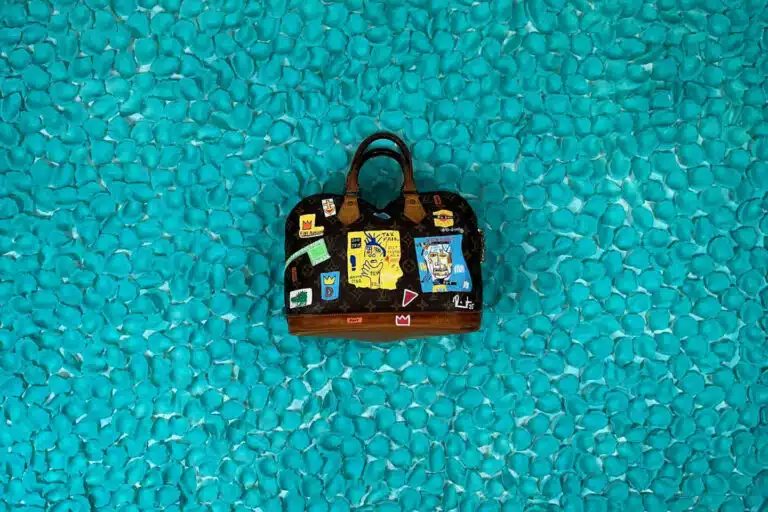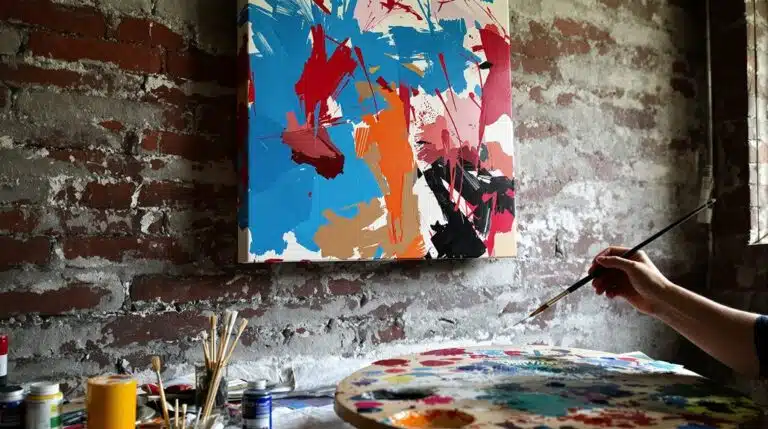
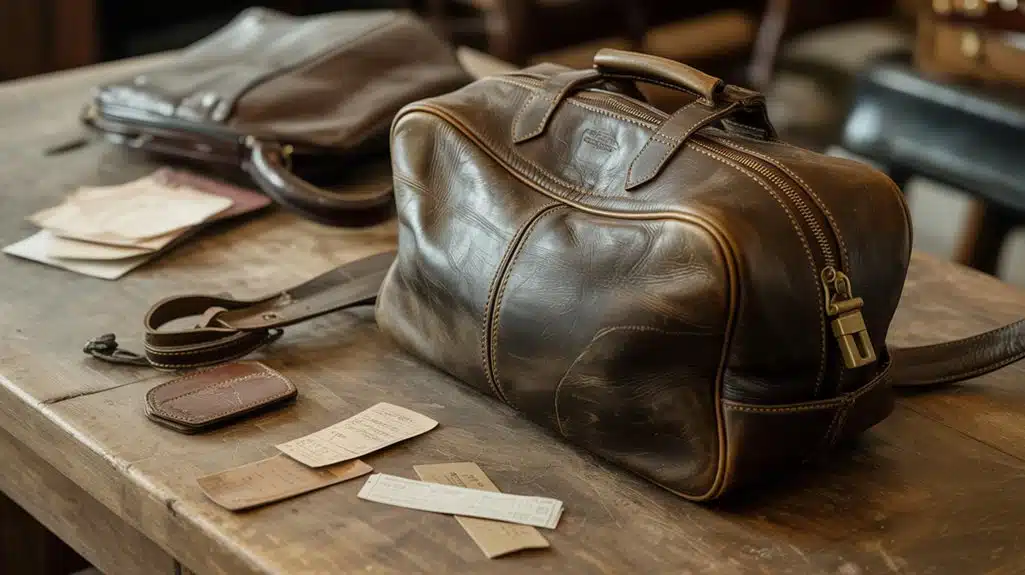
The first biography of a bag is written by the bag itself in scratched leather, frayed seams, and the faint scent of perfume from three cities. Her second biography begins when Color Meets Patina. I see Louis Vuitton canvas as confessions, Hermès silhouettes reborn in raw color, Prada transformed into a manifesto. At BrandArt by LIST, worn luxury doesn’t fade—it is being built from scratch. What hangs on your wall once lived in someone's hands. Keep going; there's more to discover.
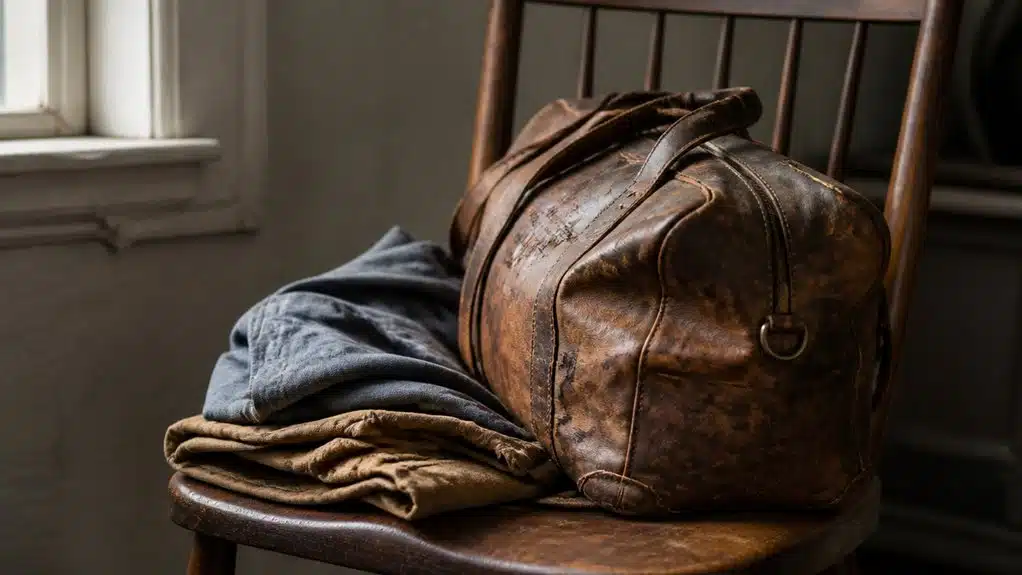
Durability is the silent rebellion of an object that refuses to remain useful.
A bag isn't created in a studio—it's born out of history, in the hands of someone who carries everything they own across uncertain terrain. Archaeologists confirm it: leather pouches existed even before 3,000 years, long before logos, long before glass display cases and velvet pedestals.
Function came first. Status came later.
What I find so radical about it is: the used designer bag embodies both truths at the same time—its time-honored practicality and its modern myth. A worn Louis Vuitton or Hermès does not lose value through use; it gains *depth* as a result. This is exactly where A Second Life for a Luxury Handbag sets out to be a metaphor and becomes a method.
BrandArt by LIST comes into play precisely at this point—at the threshold between biography and reinvention. Through upcycling Luxury Art doesn't send a Prada or Dior item into retirement.
It is reborn, recontextualized, and made unique once again.
The street remembers what the boutique forgets.
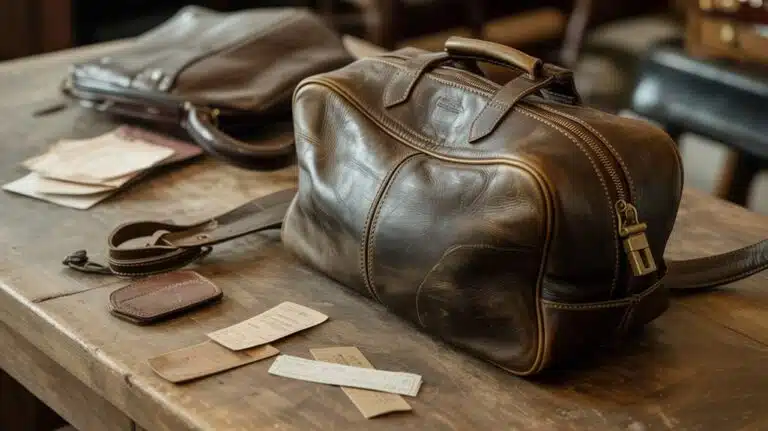
Before I give a bag a new life, I read about what it has already been through— Scratches in the leather, frayed seams, the faint scent of another life.
Every crease is a silent record: a flight to Tokyo, a dinner, a farewell.
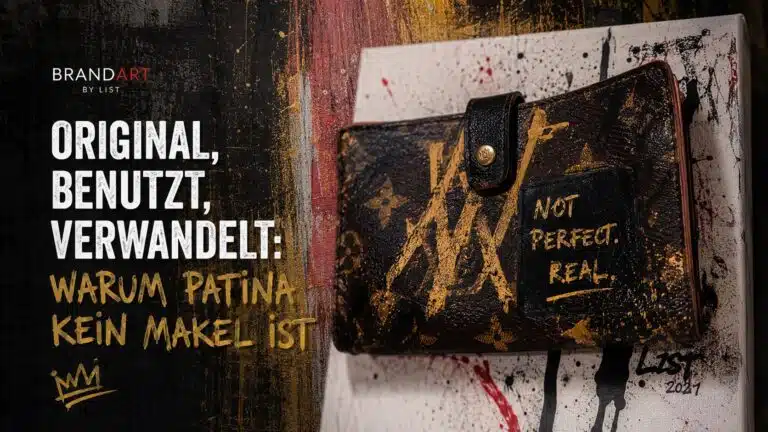
Patina isn't a weakness—it's the first biography, and I'm writing the second one.
Every bag begins its life with a Purpose – chosen for a trip, an office, or an evening that calls for a strong presence. Selected for its function. Worn for its significance. A Louis Vuitton chosen for its architecture, a Hermès for its understated elegance, a Prada for its sharp edge against soft skin. But its purpose fades. The seasons change. The bag gathers its first story— Receipt, Perfume, the spirit of a thousand decisions.
This is where BrandArt's story begins.
Whatever was purchased for its utility becomes a candidate for transformation. That Patina Art Object It does not arise in spite of its use, but precisely because of it. Every scratch is a sentence. Every worn corner is a chapter. Ralf List reads these stories and responds to them—in color, on canvas, through rebellion that has been refined into a distinctive style.
Before the canvas ever touches the leather, the leather has already begun to tell a story. Every scratch across a Louis Vuitton monogram, every crease pressed into Hermès leather—these are not flaws. They are a testament.
Patina doesn't just happen; it builds up gradually, through friction, light, and the pressures of everyday life. A A crease is not damage. It's a decision that the bag made on your behalf. Leder recalls friction, moisture, the sharp edge of a key, the warmth of your body. It oxidizes, changes, and restructures itself. What most people call wear and tear, I call Authorship.
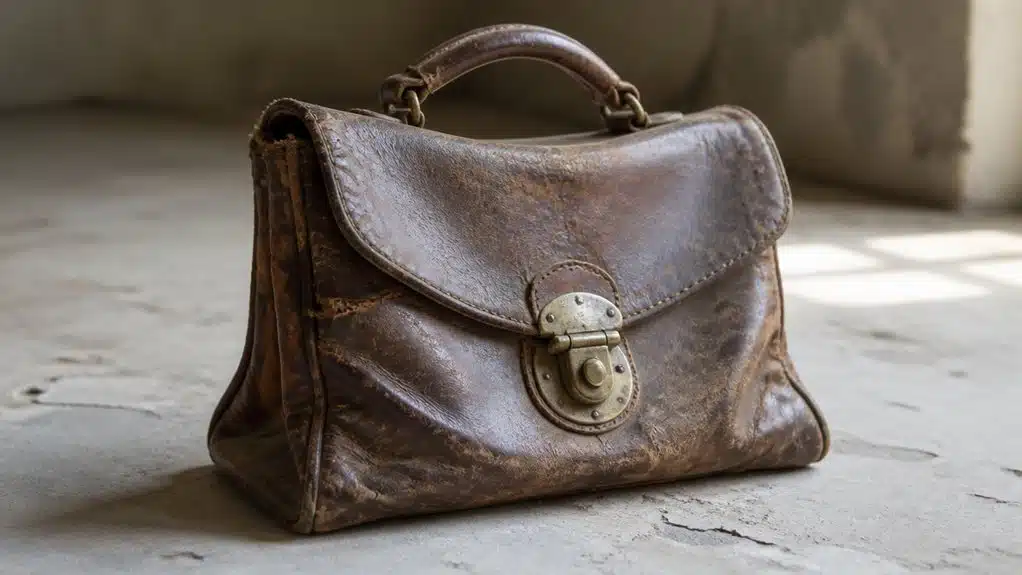
At some point, the The First Biography of a Bag not with a tear or wear and tear, but with a The Moment of Loss – the moment when a Hermès or Vuitton stops belonging to someone.
Lost and Found. The phrase sounds like bureaucracy—like a lost-and-found office and forms—but it actually describes something much more radical: an object that has lost its social identity and is waiting for a new one.
Right here, in this state of limbo Between Possession and a New Beginning, between asphalt and hardwood floors, the transformation begins—the one I bring to life in BrandArt.
There is a precise moment when a bag ceases to be a bag—not when the leather tears, not when the lock jams, but when it slips out of one's hand, which she defined.
Legally, functionally, spiritually—this separation is absolute. The object no longer belongs to a story. It belongs to possibility.
German law refers to this as the Find - lost and found item, adrift, suspended between the past and the future.
Status is shifting. Ownership is dissolving. The original function does not fade away; it breaks through cleanly.
That's exactly where I'll start—at this break.
A Louis Vuitton Adrift. A Hermès without its owner. A Prada waiting to be reinvented.
These aren't lost items—they're Unwritten Chapters. BrandArt by LIST does not mourn the interruption. It responds to it with canvas, paint, and intention.
What remains after a breakup is not a feeling—it is Substance, encoded in Stitching, Hardware, and Heritage.
A pre-owned original doesn't lose its soul when it leaves its first owner—it gains depth. Hermès doesn't lose its value with wear; it gains weight. The Louis Vuitton Monogram does not fade into obscurity; it becomes an icon.
The secondhand market understands what superficial consumption never could: Rarity, Authenticity, and Provenance hold up. It's the condition that counts. Origin Matters. The dust bag, the serial number, the undamaged hardware—these aren't trivial details when it comes to selling; they're chapters in a documented life.
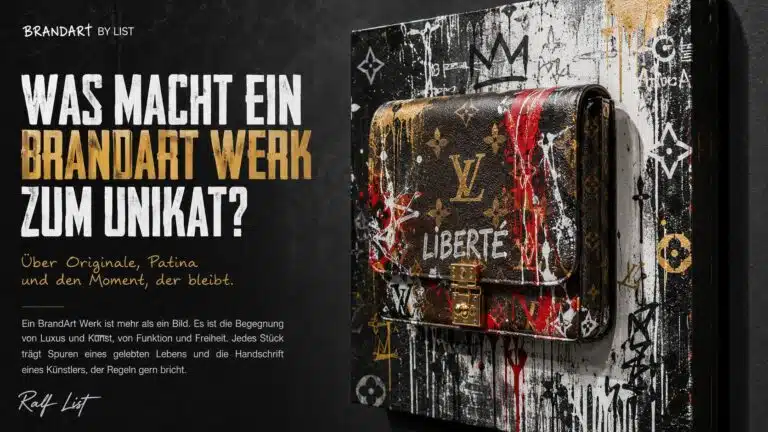
BrandArt by LIST interprets this life and writes the next chapter. The bag ceases to be just a bag. It becomes a testament—to taste, to time, to transformation.
As soon as a piece of Louis Vuitton Or when Hermès leaves your hands and touches the canvas, it ceases to be a possession—it becomes a statement. I layer new paint over old stories, combine the energy of the streets with the tranquility of the gallery, and transform the personal into something lasting. What was once your companion is now a reflection of the world.
Every bag carries a story of its own—sewn in silence, sold in splendor, worn until the story fades. But I don't let stories fade. I reawaken them through color, through tension, through the intentional collision of what was and what will be.
Color isn't just for decoration. It's a statement.
A vintage Hermès, dipped in raw complementary contrasts, turns into a confrontation – lively, unexcused, exciting. A Prada silhouette, softened by luminous neutral tones, whispers something entirely different: Restraint as Rebellion. Every shade I choose carries relational weight—it expresses connection, distance, desire, and difference.
A Louis Vuitton bag or Dior It’s not simply being reframed. It’s being reborn— The surface becomes the narrative, the material becomes the meaning.
New colors don't just change how an object looks. They change what it says—and to whom.
There comes a moment when a A bag ceases to belong to someone and begins to belong to everyone—and that’s exactly where I come in. A Birkin carried by a crowd, a Louis Vuitton captured by a camera lens, a Prada that catches a fleeting glance—these objects attract attention. They become symbols. I take this accumulated weight and press it onto the canvas, expanding the bag’s private history into something explicit, visible, and irrevocable. The Second biography It starts here: not in a boutique, not in a closet, but on the wall. Hermès Meets Asphalt. Dior makes a statement. What was personal becomes cultural; what was functional becomes mythological. BrandArt by LIST Luxury doesn't merely adorn—it questions it, celebrates it, and liberates it from silence.
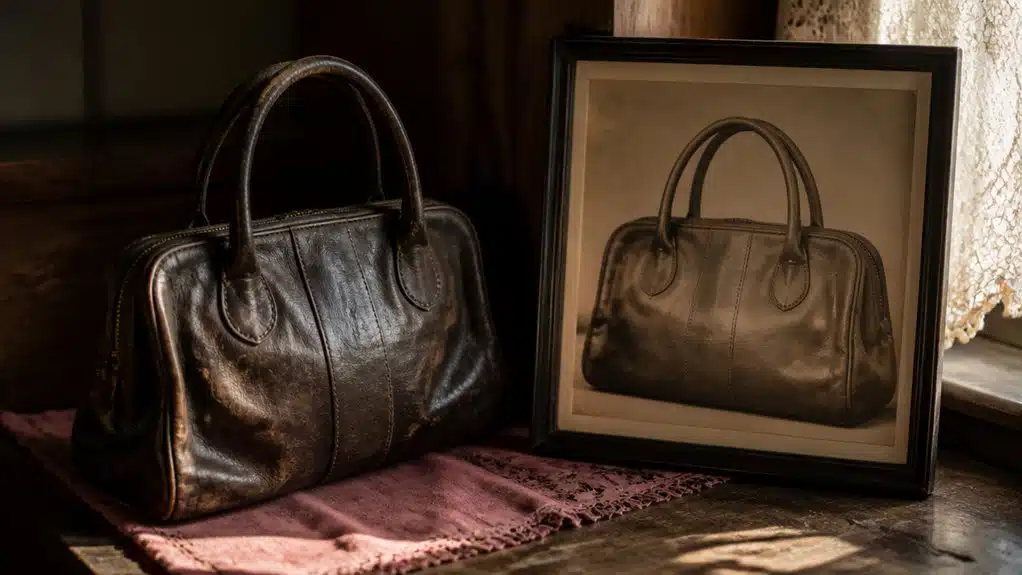
A bag that stands out because of a A Decade Full of Tuesdays The bag I carried isn't empty—it's *packed to the brim*, heavy with the weight of the decisions I've made and the mornings I've weathered. This story doesn't disappear when I place it in front of a painted canvas. It becomes even more profound.
Here, the past and the present speak the same language—leather, color, memory. A Louis Vuitton, one that was worn through three cities, a Hermès touched by a thousand decisions, a Prada that became something *personal*—these aren't relics. They are living testimony.
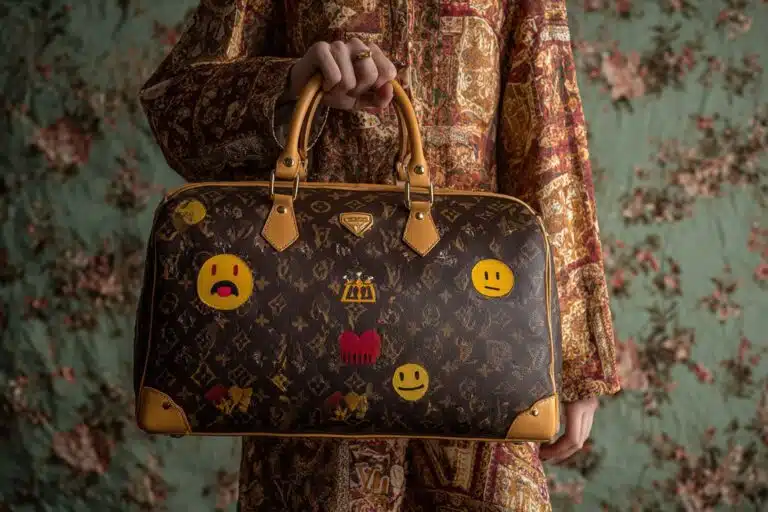
BrandArt by LIST doesn't erase what came before. It lays itself over it, beneath it, *through* it—and transforms worn luxury into a living archive. The floral background, the magnetic display, the urban wall: These aren't just decorations. This is the Present Tense of a current chapter.
Meaning does not arise solely from its origin. It arises from a collision—between the past and the present, asphalt over hardwood floors, identity rewritten in a single, deliberate stroke.
Bags have been part of civilization since three thousand years carried on their shoulders—not figuratively, but literally, Grain by grain, secret by secret, city by city.
Before architecture, before money, before borders—there was the container. This Story It doesn't disappear when a Hermès Birkin enters a gallery. It becomes deeper.
BrandArt by LIST Reads this multifaceted past and respond to it with color, intention, and irreverence. Think about what transformation really means here:
That's not restoration. That's Resurrection. Every piece I create honors the object’s original history while also telling a story that is wilder, freer, and utterly unique.
Asphalt over parquet. Raw expression over polished heritage. The bag remembers everything—I just give it a second voice.
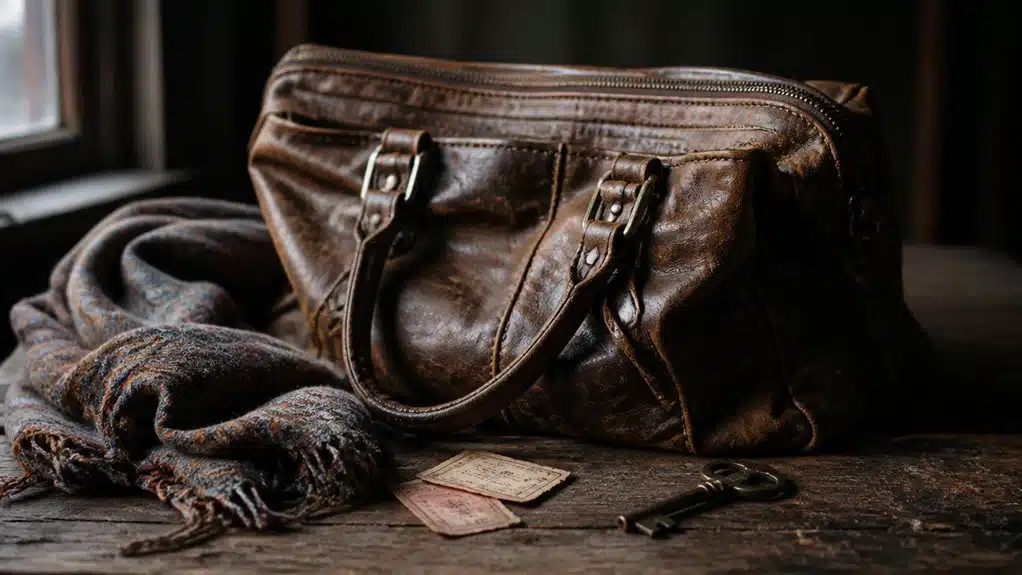
When I think about a Hermès Canvas Sometimes, something even stranger than transformation happens—the object begins to remember. Not my memories. Yours.
That is the quiet power of BrandArt by LIST: I'm not erasing the story of a bag; I'm layering yours on top of it. The Louis Vuitton, which you’ve worn through heartbreak. The Prada that survived three cities. They arrive worn, heavy, alive.
Neuroscience confirms what artists have always known—real objects activate the Precuneus, that deep inner chamber where consciousness and personal memory collide. Ten times more powerful than reproductions. Ten times more honest.
So when I present the finished piece to a Flower Background Worn, illuminated like a statement—this isn’t just decoration. It’s a reclamation. The Dior canvas becomes a mirror for everything you’ve already experienced. Wearable, signed, one-of-a-kind.
Memories remain within people—but now they have an address. A wall. A form. A 1/1 Home.
Nothing ends—it just takes a new turn. A Louis Vuitton bag doesn't "retire"; it is reinventing itself. A Hermès silhouette never fades; it turns into something, which serves as both a memorial and a manifesto. That is the quiet rebellion I weave into every piece—the refusal to let extraordinary objects fade into insignificance.
BrandArt by LIST exists precisely at this threshold: where a Prada handle meets raw canvas, where Dior leather breathes alongside layered paint. The original function recedes, and something richer comes to the fore— Symbol, Sculpture, Statement.
I don't believe in endings. I believe in new roles. A bag that was once carried through airport terminals now adorns a wall, dominates a room, and sparks a conversation that has yet to be written.
The material remains. The meaning changes. The story continues—more daring, freer, louder than before. This isn’t nostalgia. This is a a second life lived without apology.
A BrandArt piece by Ralf List currently costs you an average of about 1,790 euros – and in return, you won't get a mass-produced item, but a one-of-a-kind, autographed piece with a certificate—the only one of its kind.
You can find BrandArt right in Ralf List's online gallery—that's the quickest way. You can also browse Etsy's BrandtGallery or visit the ARTES art gallery at Auguststraße 19 in Berlin for an in-person experience.
To be honest, I can't give you an exact timeframe—that information isn't publicly documented. But when you consider that Ralf List crafts each piece as a one-of-a-kind, handmade item, it's clearly a deeply deliberate, unhurried creative process.
I work mainly with used bags—that's exactly what makes them so appealing. They already have a story behind them. But sometimes a new piece finds its way into the work, if the idea calls for it.
Yes, you can submit your own bag! Imagine your personal designer piece becoming a one-of-a-kind work of art. I recommend that you simply submit a request through the BrandArt Shop.
Here's a theory worth testing: Nothing really ends – It transforms. A Louis Vuitton bag that has weathered airports, arguments, and anniversaries doesn’t retire. It continues to evolve. I don’t bring these pieces to an end; I carry them forward. Wear and tear becomes texture. The story takes on depth. What you're wearing isn't nostalgia—it's a living archive, painted, signed, and unabashedly alive. Second biographies don't end. They begin.
 German German
  English
 Spanish
 French