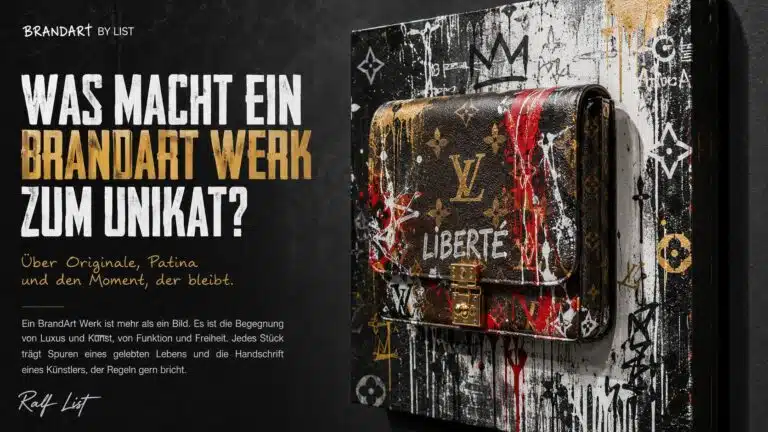
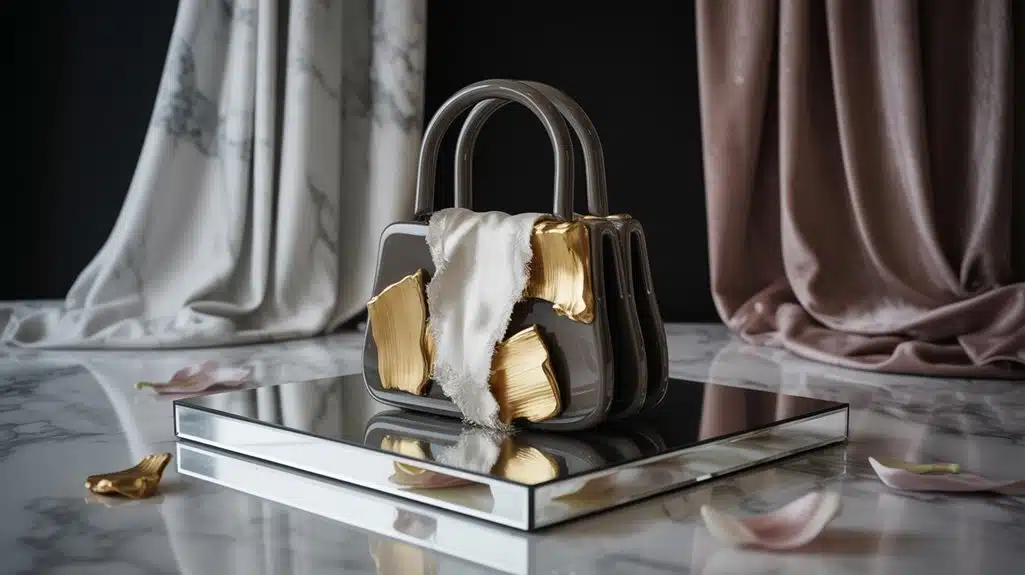
BrandArt is both—and that tension is exactly the point. I don't idolize Louis Vuitton, Hermès, or Prada, but I won't dismiss them either. The Saddler's stitch, the monogram, the quiet precision of craftsmanship—that deserves recognition. Then comes Spray paint On leather, raw canvas clashes with Dior, and the status symbol begins to raise questions. Unquestioning admiration is just shopping. Criticism without love is just noise. Keep going—there’s more to unpack.
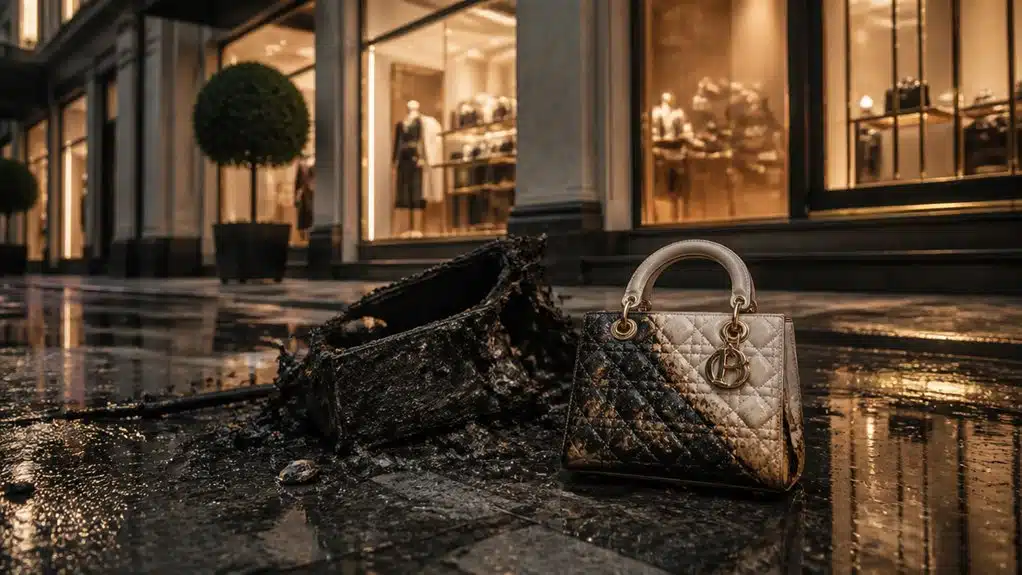
BrandArt's significance lies precisely in this contrast. The works celebrate aesthetics, quality, and radiance—and then break through the smooth surface.
A Critique of Luxury: Art and homage to luxury are not opposites here, but twins. Prada Leather beside Spray paint. Dior Monogram in the open air. Both interpretations are supported by the same work—that’s not a weakness; it’s a method.
Luxury is never neutral. It is a system of symbols, a social code, desire embodied in leather. When art speaks this language, the audience immediately wants to see a statement. BrandArt refuses to give a simple answer—deliberately, precisely, unwaveringly.
There are some things I just admire—like a Hermès saddle stitch Endures for centuries, like a Louis Vuitton Monogram Canvas becomes the symbol of an entire era.
Luxury, more than any other language, knows how to shape desire: not through noise, but through silence, precision, and the quiet promise of uniqueness.
This isn't a cult of materialism—it's Craftsmanship as a Way of Life, Material as a Manifesto.
Luxury earns its reputation stitch by stitch, grain by grain, hour by hour.
It takes up to 24 hours of pure handcrafting to make a Hermès bag – sewn with a saddle stitch, with precision-finished edges, uncompromising. This isn't just mass production. This is tangible devotion.
Where others see status symbols, I see designer objects as art, and BrandArt by LIST transforms this passion into something wilder, freer, and more authentic.
Material is memory. Design is language. And I rewrite each sentence.
Desire doesn't come quietly—it overtakes you, right in the middle of your walk, in front of a store window where you didn't actually intend to stop.
Hermès, Louis Vuitton, and Dior understood this earlier than anyone else: Wanting something isn't rational. It's a fever. It's the pain of almost having it.
Luxury doesn't sell functionality—it sells meaning, status, the whispered promise to become someone. I deeply admire that.
The ability to, To Create Longing, To crystallize an aspiration Stitched leather and lacquered hardware—that's cultural architecture.
BrandArt by LIST enters this charged space and rewires it. Desire does not disappear; it is transformed.
A Prada bag becomes a canvas. Desire becomes a dialogue. The heist becomes an invitation—not to consume, but to creating something unique together.

But Luxury It also has a side that I don't just frame and admire—I question it, directly and without apology.
If a Hermès Bag If it says more about status than about the person wearing it, it becomes Mask, no more expression.
And the unspoken rule that a Louis Vuitton, a Prada, or a Dior should remain untouched—that’s not reverence; that’s control.
What if the bag says more about fear than about taste— Fear of being invisible, unforgettable, unnoticed? A Louis Vuitton Monogram "whispers" is not a personality trait; it shouts "belonging". A status you borrow from a label is not an identity—it is Armor Over Emptiness.
BrandArt by List tears this armor apart. When Hermès meets raw canvas, when Prada collides with a painted gesture, the object ceases to project status and begins to carry meaning. I don’t destroy luxury—I Question him. I press paint against leather until the question arises: Who are you beneath the fire?
That's not criticism. That's liberation.
There's a rule that no one has written down, but everyone enforces—that a Hermès Bag arrives perfectly, leaves perfectly, and remains untouched between those two moments. I completely question that.
A Prada Handle held up by a painted canvas, a Louis Vuitton-A surface that meets raw brushstrokes—these aren’t violations. They’re conversations. The idea that a brand must remain seamless, static, and confident is a cultural construct masquerading as a law. I treat it for what it is: a starting point.
Luxury has an aura, craftsmanship, and desirability—I don't destroy that. I redirect it. When I Dior piece Even when I place it in a new artistic context, the brand doesn't lose its strength. It simply takes on a different character. Transformation It's no big deal. It's the next sentence in a story the brand never finished writing.
BrandArt doesn't take sides—it thrives on the tension between the two. I'm not here to kneel at the altar of Louis Vuitton or drag Hermès through the mud of irony; I'm here to Prada to hold it up to the light and ask what it’s really made of—without excuses, without a sermon.
Appropriation without worship, criticism without pointing fingers—that’s the fine line I walk, where admiration sharpens into curiosity and a Dior Bag becomes something the brand itself would never have dared to dream of.
Neither unquestioning deference nor outright rejection— BrandArt by List moves along the razor blade between the two, and it is precisely this tension that gives the work its life. Appropriation is not theft in this context – It's transformation. A Louis Vuitton bag doesn't just disappear; it is being reborn.
List doesn't bow down. He intercepts. He takes what luxury has built—the seduction, the craftsmanship, the cultural weight—and it changes course. No deference. No rejection. Just an honest, uncompromising reinvention on his own terms.
Criticism hits hardest when it comes out of the blue. BrandArt doesn't give lectures—it transforms. A Hermès Kelly She is not condemned; she is liberated, drawn from her velvet pedestal into raw, living art. No moral finger-pointing. No manifesto of shame. Just a Louis Vuitton Monogram, which meets Asphalt Energy on gallery walls, a Prada Silhouette, which is reborn beneath layers of pigment and intention.
Criticism lives within the transformation itself—quiet, sharp, undeniable. Dior Stitching come face to face with the harsh reality of life on the streets. That is Ambivalence as an Artistic Weapon: You feel both the longing *and* the unease at the same time. BrandArt endures both without batting an eye, without preaching. The tension between longing and questioning—this electric, unresolved space—is precisely where the work lives, breathes, and cuts deepest.

If you have a Hermès Birkin Place it next to a spray-soaked canvas, tear it open a little—and that's exactly the point. BrandArt by List It does not take sides—neither that of reverence nor that of resistance. It holds onto both, quite deliberately, like the tension in a brushstroke.
The Birkin remains beautiful. The Louis Vuitton monogram still carries weight. Dior’s geometry, Prada’s cool austerity—none of it is going away. What’s changing is the context surrounding it.
The monogram still carries weight. The geometry still makes an impact. Nothing disappears—only the frame around it shifts.
That’s the distinction I keep coming back to. BrandArt doesn’t reject luxury. It questions it. It celebrates it. And then it gives it back to you—transformed, recharged, and entirely yours.
Balancing reverence and rebellion—that’s not a contradiction in BrandArt by List; it’s the very foundation of its architecture. Every Hermès clasp, every Dior silhouette, every Louis Vuitton monogram becomes raw material—honored, then shattered, then rebuilt into something that breathes differently.
| Dimension | Printout in BrandArt |
|---|---|
| Tribute | Recognition of Craftsmanship, Iconic Status, Design Genius |
| Criticism | Reinterpretation of the Logic of Possession and Status |
| Synthesis | Art as a Third Space Between Celebration and Provocation |
This table is not mere decoration. It maps out the inner logic of a movement that defies simple answers. Prada is not idolized here—it is reborn. The gallery floor becomes asphalt. The status symbol becomes a statement. BrandArt by List exists precisely where luxury sheds its armor and art finds its voice—unapologetic, unique, free.
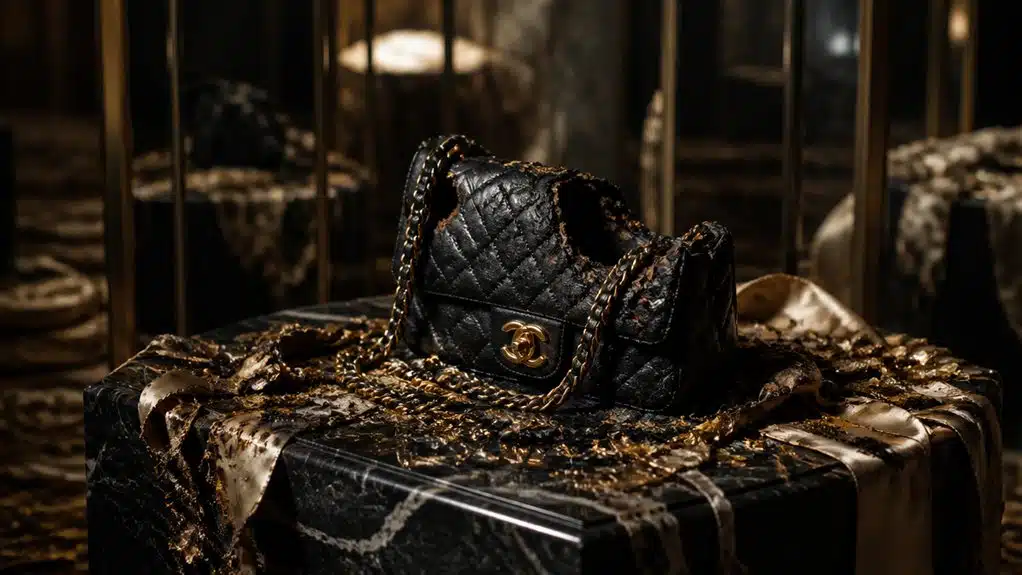
Both answers are wrong—and that's exactly the point. The question of whether BrandArt Homage or Criticism is, is like asking whether a Hermès Birkin Leather or legend—it’s both, at the same time, without apology. Ambivalence is not a weakness. It’s the sharpest tool in the studio.
Ambivalence isn't a weakness. It's the sharpest tool in the studio—and the only honest answer.
A single judgment would flatten what the work is truly about: keeping two truths in tension until they vibrate.
Where street asphalt meets gallery parquet, where raw energy clashes with refined materials, BrandArt by LIST defies resolution.
The tension is the meaning. The contradiction is the confession. Stay uncomfortable – that's where art comes alive.
There is a kind of love that doesn't want to leave things untouched—and that is exactly where it lives BrandArt by LIST.
I'll take one Hermès Kelly or a Louis Vuitton Wallet Not to hold it in my hand and worship it behind glass. I take it in my hand because I want to argue with it, to fight against its polished certainty, to mark it with something rougher and more authentic than its original price ever could.
That's not destruction—that's Dedication with backbone.
Criticism without admiration is just noise. Admiration without criticism is just shopping.
BrandArt captures both at the same time—scratches and signatures imprinted on the same surface—, Dior Meets the Asphalt, Prada carries a story it was never meant to tell.
My final answer to the question is simple: I love these objects enough to transform them.
Not to make them smaller—but to free. That's the movement. That's the work.
A typical BrandArt piece by Ralf List currently costs 1,790 euros. In return, you'll receive a truly one-of-a-kind piece—an original work, a custom-designed canvas, the artist's signature, and a certificate. It's not a mass-produced item, but a work created with genuine artistic freedom.
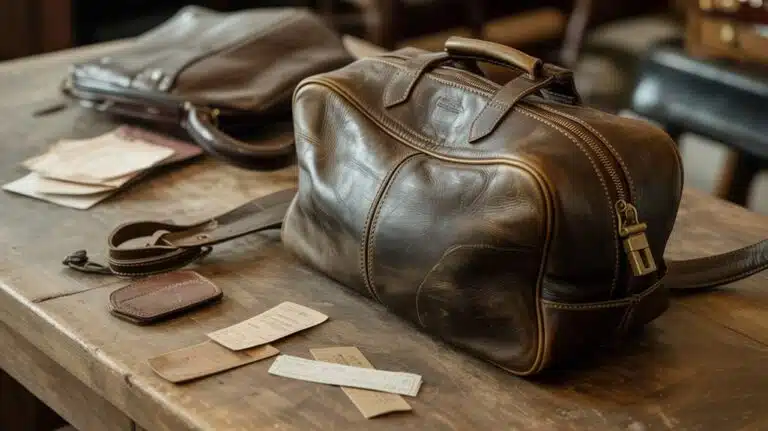
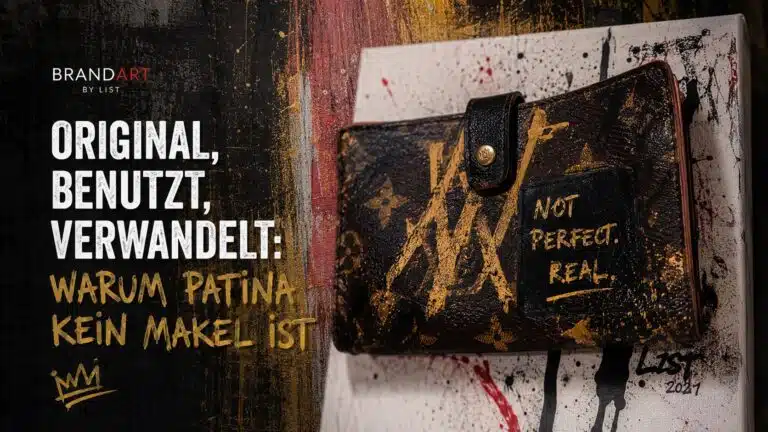
Yes, genuine designer pieces are used—original Hermès, Dior, and Louis Vuitton items, sometimes even with visible signs of wear. This backstory makes every transformed work of art a true one-of-a-kind statement piece.
To be honest, there is no publicly available, verified timeframe for a single BrandArt piece. Since each piece is a handcrafted 1/1 original, the time it takes to create one likely varies—you’d have to ask Ralf List directly to get a real answer.
You can find BrandArt works in the online gallery at brandart.com, where prices start at 1,790 euros. Contact us directly at info@brandart.com if you’d like to learn more about purchasing or exhibiting these groundbreaking originals.
Luxury brands often respond by protecting their trademarks—but this is where the tension lies: On the one hand, they see a gain in prestige through cultural visibility; on the other hand, they face a loss of control over how their brand is interpreted when art redefines the brand’s meaning.
I don't relieve the tension—I live with it. Studies show that 72% is the Luxury consumers feel guilt alongside desire, and BrandArt honestly acknowledges this contradiction. I love the Louis Vuitton Stitch, the weight of Hermès, the precision of Prada—and I wonder why they move me. List doesn't demand that you choose. He invites you to feel both. That's not ambivalence. That's integrity.
 German German
  English
 Spanish
 French