
You recognize famous logos before you notice faces, before you read words—they are reflexes burned into the nervous system. Most artists freeze up. Not me. The fear dissipates when you realize that a Louis Vuitton-A monogram or a Hermès silhouette is not sacred—it is raw material that carries decades of cultural energy and awaits reinterpretation. I pick up a paintbrush where others shy away. The logo is losing its sacred status. That's exactly where it starts BrandArt by LIST —and there's much more to discover.

Before you recognize a face, a name, or a word— The logo has already made an impact. It doesn't knock. It just walks in.
Before the mind can catch up, the eye has already made up its mind. The logo doesn't wait for permission.
That's not a weakness of the mind—it's Perception Before Content, a neurological reflex that predates language. A Louis Vuitton Monogram, Hermès orange, the Prada triangle: They create visual priority, before consciousness even kicks in.
I'm not afraid of it. I work with it.
BrandArt by LIST turns this very moment into a canvas. The famous logos Don't ignore it, don't destroy it—but rather hijack, transform, recode.
What began as a status symbol has become a personal manifesto. Asphalt meets hardwood. The street meets the gallery.
The logo makes its entrance first—but what comes next is up to you. Dior It becomes a gesture. Hermès becomes a way of life. The one-of-a-kind piece speaks before you even open your mouth.
That's what I call freedom.
Awe for a logo does not arise by chance—it is deliberately cultivated over decades through scarcity, myth, and the subtle pressure of social judgment.
A Hermès clasp, a Louis Vuitton monogram, a Dior stitch: They don’t wear the price tag on their clothes—it’s in the air around them.
And then comes the Fear – not about damaging the thing, but about not being up to the task it demands of you.
Logos don't earn respect by chance—they inherit it, century after century, stitch by stitch, scar by scar.
Hermès has been using leather for centuries, long before a single piece of canvas even existed.
Louis Vuitton, Dior, Prada – They have turned price, history, and social hunger into something that feels untouchable.
Scarcity became a topic of discussion. Prestige became the currency.
But here's the truth: I'm not going to let that intimidate me.
Ralf List BrandArt breaks down precisely this inherited reverence—not through vandalism, but through vision.
In the context of designer logo art, it means taking the symbol and reinterpreting it.
Luxury brands take on a new meaning as soon as color, canvas, and attitude come into play.
The logo stays. The submission disappears.
Fear doesn't give you any warning—it hides in that moment of hesitation before you touch something that costs more than a month's rent. That tremor is real. Hermès whispers *don't get me dirty*. Prada It feels like a verdict. Louis Vuitton It already carries a judgmental gaze. We’ve been trained to treat these objects like relics—behind glass, behind barrier tape, behind a veil of reverence.
But artistic freedom for brands means something radical: It means freedom *from* the Fear, not in spite of the brand, but *because of* it. BrandArt by LIST It takes that fear and paints right over it. Dior becomes a canvas. The bag you barely dared to breathe near becomes a signed, living work of art. Transformation doesn’t ask for permission. Neither does art.

Awe is a beautiful feeling—until it becomes a shackle. Anyone who stands before a Louis Vuitton Monogram or a Hermès Leather stands as if before a sanctuary, holding the brush firmly instead of guiding it.
Caution preserves the object; respect transforms it—and without this intervention, the work remains silent.
Caution doesn't protect you—it freezes your hand before the brush even touches the surface.
Respect is recognition; awe is surrender. I respect Louis Vuitton, Hermès, Prada, Dior— I'm not afraid of them. That is the difference between an observer and a creator.
When I stretch a canvas over a Chanel flap When I speak, I don't conform to any brand identity—I engage in a conversation as an equal, speaking loudly, precisely, and without apology.
Self-censorship doesn't bear a monogram, but it leaves traces: unfinished sketches, half-hearted drafts, ideas that die in the mind.
BrandArt by LIST is born where the process becomes more important than perfection, where color meets patent leather, and where the result needs no one’s permission.
Courage isn't a style. Courage Is the Method.
Guardini was right—but only up to a point. Awe creates space, yes—but if you just stand there, you won't get anything done. I stand in front of a Hermès, a Vuitton, a Dior—and I take action. Not out of disrespect, but out of artistic necessity.
Amazement alone does not alter a surface, break a pattern, or make a statement. Only intervention transforms admiration into a statement—and an object into a manifesto. BrandArt by List is exactly this moment: Canvas Meets Leather, Color meets prestige; the street meets the studio.
The logo stays—but it now conveys a different message. Transformation is not an attack. It is the only honest response to beauty, waiting to be explored further.
When I have a Authentic Louis Vuitton Whether I’m holding a Hermès bag or something else, it’s not the start of a production process—it’s the start of a conversation.
First, I'll take a look at: the Seam, the luster, the history that the material already carries before I dare to make a single brushstroke.
The existing design is not an obstacle, but rather my partner in dialogue—I push his limits, respond to his language, and transform it into something that no longer belongs to any catalog.
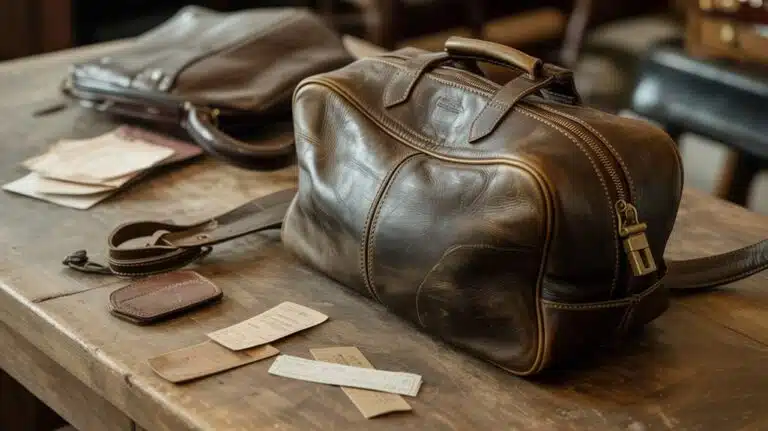
Each original object—one Pre-owned Hermès Birkin, a dented Louis Vuitton, a Prada bag with a story etched into its leather—tell me that first, before I make a single brushstroke. I observe. I read scratches like verses, I feel the seams like the beats of a rhythm. Then I react—not to the brand name, but to what the object truly is: a testament to lived identity.
The essence of the original remains intact; I work with it, not against it. Like a Smart Object Behind its protective layer, the bag keeps its contents safe, while I push the boundaries on the outside. Asphalt meets hardwood floors. The Street Meets the Gallery. And suddenly something emerges that is neither a product nor mere art—but both at the same time, unapologetically.
Observation is the first step—but Action begins with listening.
I pick up a Louis Vuitton, a Hermès, a Prada, and ask it: What does it already carry? What does it keep silent about?
The original is not a blank slate—it is a conversation partner with a history, substance, and character.
I don't conduct audits in the clinical sense. I'm having a conversation.
Form, proportion, typography—everything speaks to me before I make my first brushstroke.
The existing design shows me what remains, what rubs, and what's missing.
Dior wears elegance like a second skin—I decide where the asphalt meets the hardwood floor.
Listening in this way does not produce copies. It produces answers—one-of-a-kind, hand-signed, and irreplaceable.

What remains when the paint has peeled off, the flagship store has closed, and the campaign has long been forgotten? A Reprint. A Reminder. A character that appears in the collective memory burns, even if no lawyer is there to protect it anymore.
What remains when there is no longer a lawyer to protect us? A symbol. Deeply rooted in the collective memory.
Louis Vuitton, Hermès, Prada, Dior—these names outlive their legal status because they have long been ingrained at a level deeper than any registry. They live on in attitude, association, and physical sensation. The legal protection expires after five years of nonuse—but the cultural connotation remains, as stubborn as paint on rough concrete.
This is exactly where BrandArt by LIST begins. I don’t work with intellectual property rights—I work with the reverberations. With what remains when the empire falls silent. The A Bag Becomes a Canvas, the logo as a raw material, the one-of-a-kind item as the answer to a question the brand itself never asked.
I have a say in what remains.
A logo isn't just decoration—it's a promise, burned into the retina and the nervous system before the mind even has a chance to doubt it.
I do not fear this power. I use them.
Here's why Famous Logos are not a threat in my work—but rather Raw material:
BrandArt by LIST tackles the very point where identification turns into submission.
The Canvas Meets Leather.
Asphalt Meets Hardwood Flooring.
The promise remains—but the balance of power is shifting.

When a logo stops merely protecting, it starts to speak—and that's exactly where I pick up my brush.
A Hermès Monogram, a Louis Vuitton Patterns, a Dior Logo: These symbols have embodied power for decades. But power is not a lock. It is an invitation.
I’m not afraid of famous logos—I respect their potential. The moment a piece of Prada leather meets my painted canvas isn’t an act of submission. It’s a dialogue. A collision. Liberation.
BrandArt by LIST was born where asphalt meets hardwood—raw, precise, unapologetic. Every 1/1—One-of-a-kind It embodies three truths: the brand's history, my artistic interpretation, and your identity as the wearer.
The logo loses its immunity. And that's exactly when—that's exactly when—it becomes art.
Currently, BrandArt works by Ralf List cost 1,790 euros – This isn’t a partial price, but the complete, one-of-a-kind piece: the artwork, the canvas, the transformation, the signature, and the certificate. There is no official average price.
Every piece is completely one-of-a-kind—how ironic that mass-market brands, of all things, provide the template for something that exists in only one copy. You don’t get “No. 47 of 500”; you get your own unique original.
Luxury brands often send cease-and-desist letters and want you to stop. I invoke artistic freedom—my works are critical and parodic, not advertising. Courts review each case individually, and my artistic intent protects me in these situations.
You can find BrandArt pieces in my online gallery—each one is one-of-a-kind, unless it’s marked as sold. For a live experience, I recommend contacting me directly.
Chanel, Louis Vuitton, and Hermès are the brands that come up most often—true icons that everyone knows. I deliberately choose bags that already have a story behind them and transform them into something completely new.
I've stripped Louis Vuitton, Hermès, Prada, and Dior down to their bare bones—and what remains isn't a brand. It's raw material. The logo loses its armor the moment I decide what it means. That's exactly where it comes to life BrandArt by LIST: at this very moment of the recapture. You're not just admiring it from a distance. You You are driving the transformation. You'll make a statement.
 German German
  English
 Spanish
 French