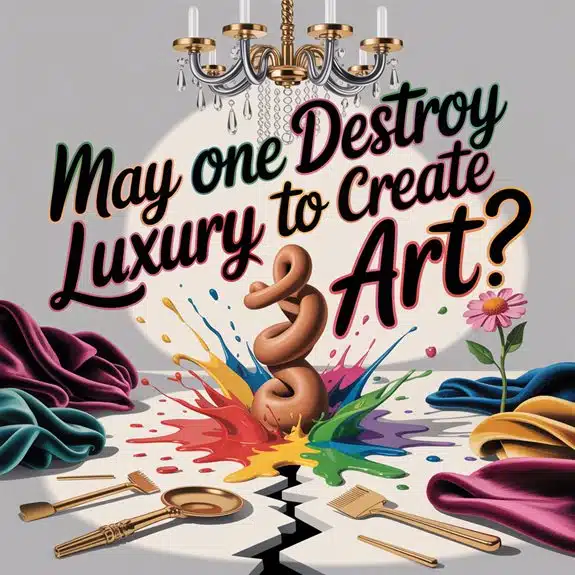
Destroying luxury items to create art is not vandalism—it’s a statement. I don’t destroy a Hermès Birkin or a Louis Vuitton; I interrupt it, and force it to speak beyond its logo. Stitching, color, and canvas become a second biography. The object does not die—it shifts in meaning. Transformation is not reckless; it is radical precision. What remains is louder, freer, and irrevocably alive. Keep going—a complete manifesto awaits.
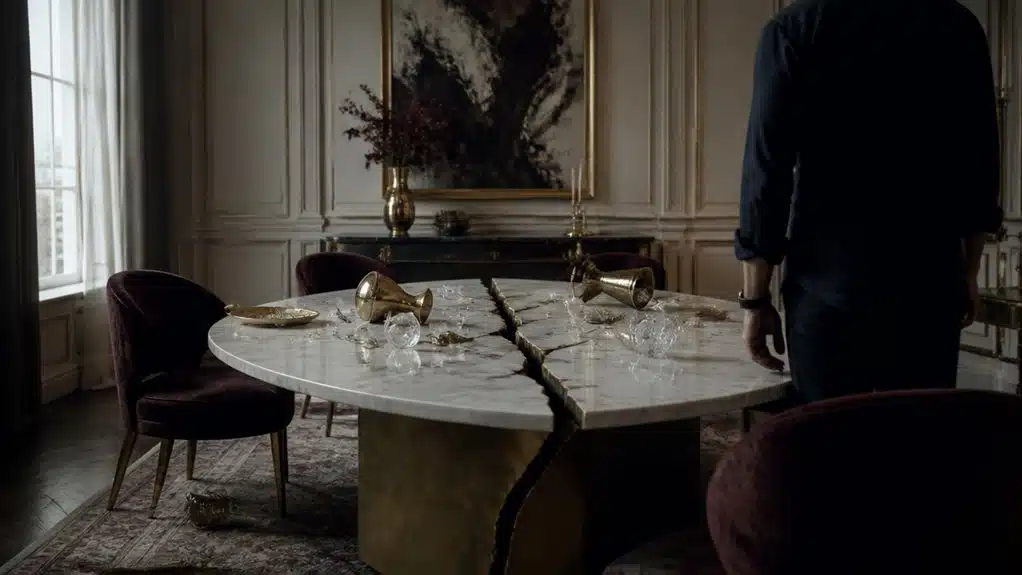
Anyone who has a Hermès Bag When he buys something, he doesn't buy leather—he buys a Conviction, a Belonging, a silent promise of the Inviolability.
Who Luxury He carries—not things—but an attitude, a boundary, an invisible promise.
This respect is real.
But somewhere between admiration and a no-touching rule, he becomes the Taboo – invisible, collective, non-negotiable.
I know exactly what that moment is like.
It arises when an object is no longer possessed but is instead protected.
When it comes to Louis Vuitton, Prada or Dior cease to be things and become symbols of an order that no one is allowed to disrupt.
That's not awe anymore—that's paralysis.
BrandArt by LIST enters precisely this frozen space.
Not to destroy, but to Transforming Luxury: from the altar to the alley, from the museum to the street, from silence to conversation.
The canvas meets the leather.
Breaking a taboo is not an attack—it is an invitation to see things in a new light.
One Hermès Bag It is not a sanctuary—it is an object, shaped by human hands, hype, and market forces, just as susceptible to change as anything else in this world.
I Don't destroy, I draw a distinction: between what an object once was and what it can become when canvas meets leather and meaning is renegotiated.
The original value doesn't disappear—it is transforming, condenses, and becomes etched into a one-of-a-kind piece that neither the street nor the gallery alone could have created.
Whether it’s Louis Vuitton, Hermès, or Prada—nothing is off-limits once it hits the canvas.
But before we continue, we need to distinguish between three terms: Destruction, Change, Transformation. It sounds similar, but it means completely different things.
Destruction eliminates form and function—the end, not a new beginning. Change optimizes, repairs, and adapts without altering the basic model.
Transformation, on the other hand, breaks with the paradigm. It challenges basic assumptions and creates a new framework of meaning.
When I look at art from Luxury Bags I don't reshape or restore—I transform. A Designer Handbag Art is not damaged; its status, language, and identity are renegotiated.
To view luxury items as art means that the familiar remains recognizable, yet transformed—like asphalt over parquet, the raw over the refined, The Street Meets the Gallery.
Transformation leaves no value behind—it takes it with it, reshapes it, and rewrites it.
A Hermès Birkin or a Louis Vuitton bag embodies decades of artisanal precision; that doesn't disappear when Paint on Leather is correct. The Value changes. It changes its form, its language, its context—but it remains materially rooted, culturally charged, and indelibly present.
BrandArt by List sees this as a principle: A rarity remains a rarity, even if it is being reimagined. The original doesn't remain silent—it speaks louder because it now carries a story that extends beyond boutiques.
Prada and Dior lay the foundation. The canvas brings the rebellion. Together, they create a one-of-a-kind piece that has no predecessor and tolerates no successor.
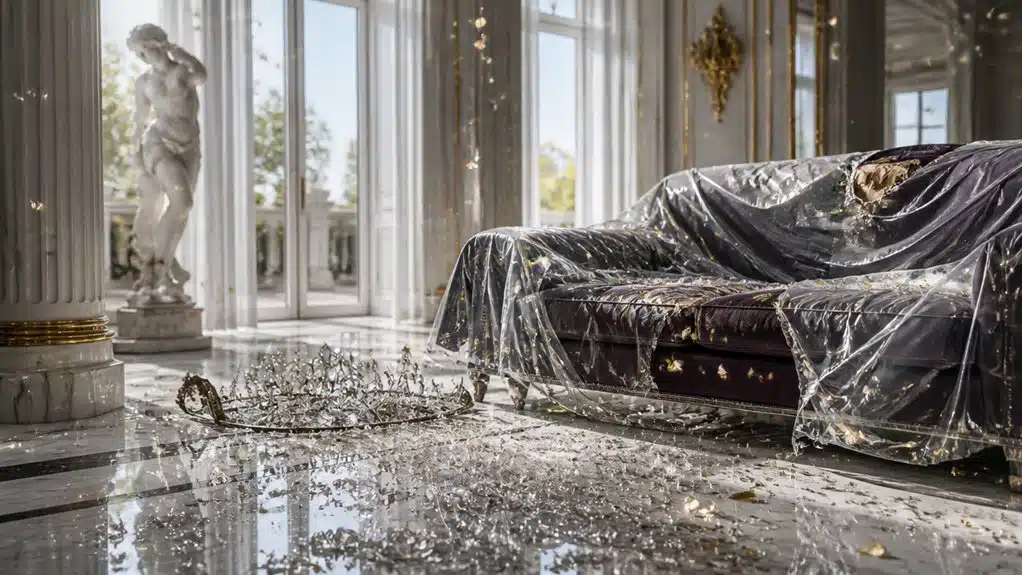
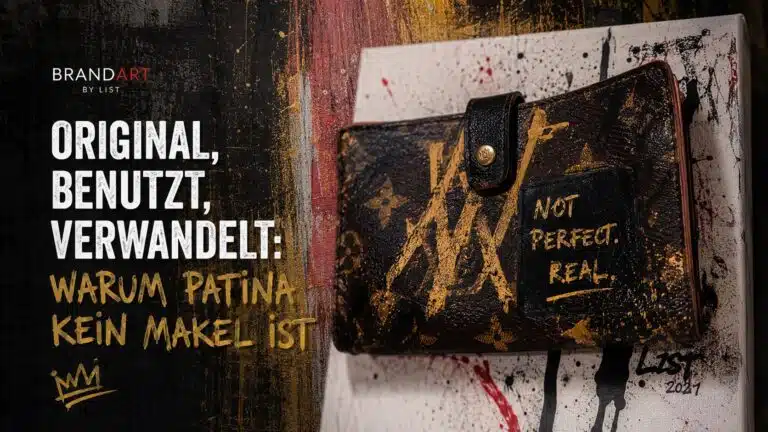
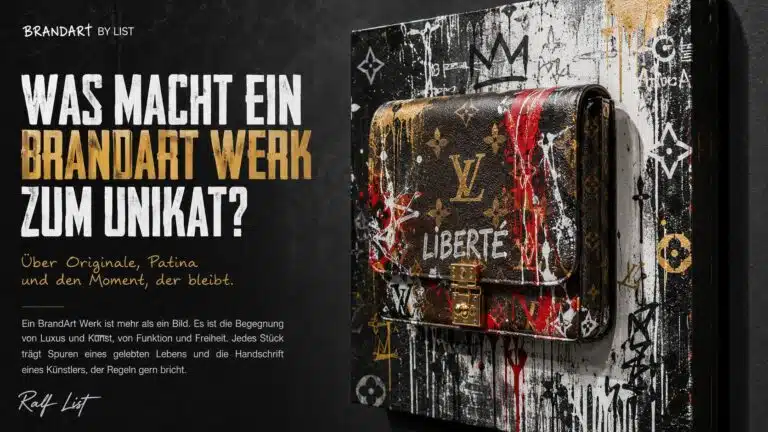
When I have a Louis Vuitton Or if Hermès gets its hands on it, the logo doesn't die—it mutates; it suddenly speaks a different language, loud, off-key, defiant.
The canvas I drape over it isn't a cover-up; it's a second life, a Second biography, written with color, irony, and intent.
What remains is No longer just an accessory – It's a document.
The logo doesn't die—it will be rewritten.
A Louis Vuitton Monogram, a Hermès Stamp, a Dior Logo: These symbols have carried meaning for decades, packed tightly like silk in an archival case.
When I superimpose my image on top of it, the logo doesn't disappear—it starts to speak differently, more freely, more dangerously.
The The brand name remains legible, but the context shatters the old narrative.
A status update becomes a quote. A quote becomes a comment. A comment becomes art.
One Prada bag with my canvas It's no longer just a product—it's a selling point.
What used to signal a sense of belonging now signals a stance.
The aesthetic shift arises precisely at the intersection of recognition and alienation, between the familiar and the defiant—this is no coincidence; it is a method.
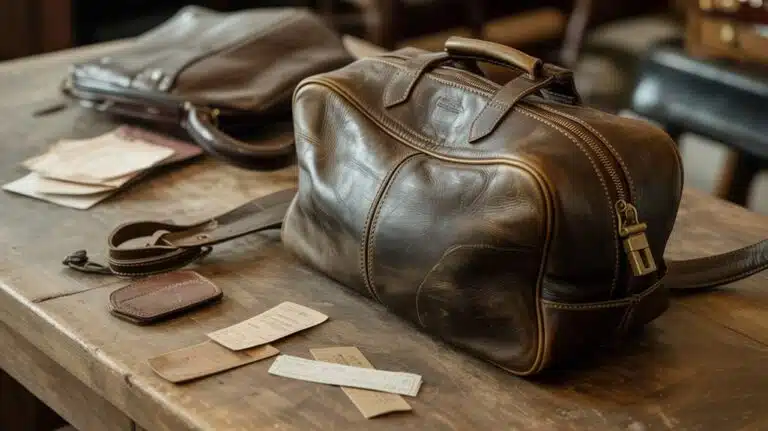
Every object has a story to tell— engraved into the seams, stored in the scent of leather, hidden in the weight of a Hermès flap, which has already been opened a hundred times. This story doesn't end when I step in. It starts all over again.
The artistic act is not destruction—it is a Recoding. A Birkin becomes a canvas, a Louis Vuitton bag becomes a sculpture, and a Prada bag becomes a statement.
What remains is the materiality: the seams, the weight, the traces of real life. What shifts is everything else—meaning, context, and frameworks of interpretation.
Igor Kopytoff called it the Biography of the Thing. I call it the second truth. The object enters a new narrative—not erased, but liberated. The past and the intervention are interpreted together as an ongoing process. Unfinished. Alive.
Without risk, a work of art remains mere decoration—beautiful, silent, inconsequential.
When I have a Hermès Birkin slice open or a Louis Vuitton If I cover it with acrylic, I risk the criticism of purists, the silence of collectors, and a free fall between art and an affront.
This responsibility toward the original is not an easy one to bear, but it is precisely this tension—between reverence and intervention—, Destruction and Transformation, luxury, and liberation—that is the moment when BrandArt comes into being.
If you don't take any risks, you're just decorating.
A work devoid of uncertainty repeats what is already known—it affirms, reassures, and fades into the wall.
No friction. No cuts. Just a smooth surface.
BrandArt by List firmly rejects this comfort zone.
If a Hermès Birkin or a Louis Vuitton Neverfull When it comes to editing, revising, and recoding, there is more at stake than just aesthetics— Meaning itself is negotiated.
The work could fail, be misunderstood, or be off-putting.
That is precisely where its strength lies.
Decor reinforces viewing habits.
Art moves them.
What was once a symbol of silent accumulation becomes, in List’s work, a space of contradiction—asphalt over parquet, commitment over possession, transformation over mere representation.
Taking risks isn't a weakness.
It's the method.
Risk doesn't protect—but responsibility shapes us. If I have a Hermès Birkin, whenever I pick up a Dior Saddle or a Vuitton Speedy, I’m not just holding leather. I’m holding someone’s vision. That comes with a responsibility.
Destruction without intention is not art—it is vandalism with a sense of self-importance. What I create must honor the original by surpassing it. Transformation, Not Eradication. The handbag remains recognizable, breathing, alive—but it now bears a second soul.
Prada’s structures become a canvas. Stitches become strokes. Ownership does not absolve me of my responsibility toward the cultural significance of the original. Artistic freedom does not mean recklessness—it means radical precision. I'll risk everything, but I won't destroy anything that has meaning.

An object does not die when it ceases to be useful—it waits. It wait for the moment, where someone teaches him a new language. At BrandArt by LIST That's exactly what happens: A Hermès Bag, a piece of Louis Vuitton leather, a Dior monogram—they break free from their functional context and enter something greater. Not through destruction. Through Shift in Meaning.
The transition is not a material process, but an interpretive one. When I sign, name, or combine—I transform Consumption and Attitudes, Brand as metaphor, surface as statement. This isn't just decoration. It's a consistent expression of identity.
Prada becomes the vessel of a story. Vuitton becomes the canvas for a worldview. The institutional context follows the artistic purpose—not the other way around. A A One-of-a-Kind Piece Is Created Not in the factory. It arises the moment an object stops explaining itself and begins to speak.
Destruction is not the end—it is a choice. When I make a Louis Vuitton Bag If I take it and transform it into something new, nothing dies. It transforms. Luxury Loses Its Serenity and earns a vote.
Destruction is not annihilation—it is the moment when an object ceases to remain silent.
What happens when status meets asphalt:
That’s not the kind of luxury that protects. It’s the kind of luxury that provokes, liberates, and speaks out. Transformation takes courage. Art needs materials. And materials need someone who dares to use them.
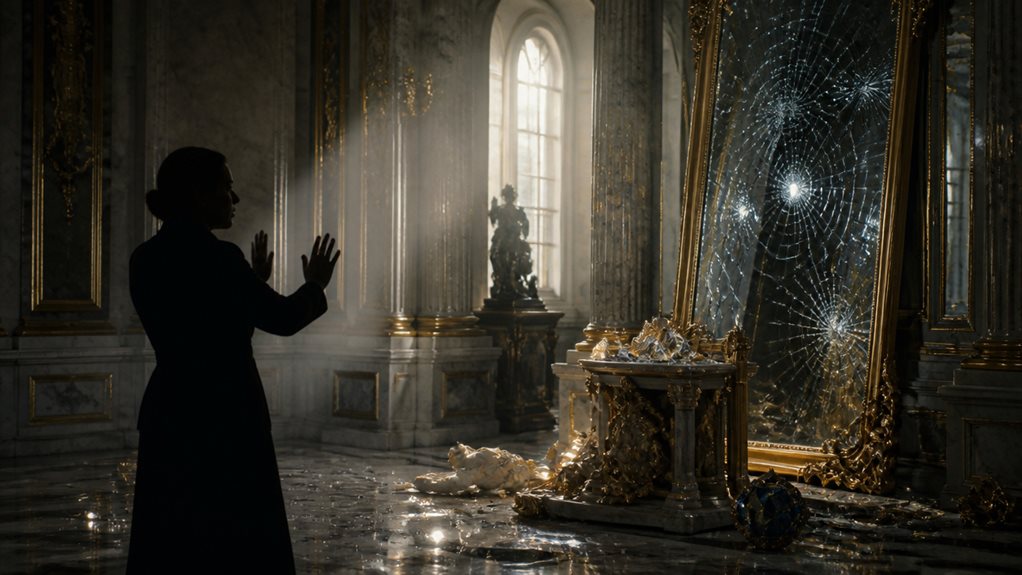
If I a Birkin bag To be clear, I'm not taking a knife to Hermès—I'm wearing it against silence. Contrary to the logic that Beauty Beyond Reach must be. Against being the final stop.
What results is not damage. It is contradiction—precise, visible, tangible. The Seam on a Dior bag, opened and resealed with paint, tells us more about desire and emptiness than any advertising campaign ever could. Leather, canvas, light—three materials, one message.
BrandArt by LIST does not destroy objects. It frees them from their rigidity. A Louis Vuitton Monogram Pattern becomes a canvas for what luxury was never allowed to admit: vulnerability, irony, truth. The bag ceases to be a status symbol—and begins to speak for itself.
I don't destroy. I respond. Loudly. In color. With every brushstroke a phrase the brand itself would never say.
It's funny how freedom comes at a price—it's 1,790 euros. That's what I would pay for a Ralf List BrandArt piece, provided it includes the original object, the canvas, the transformation, the signature, and the certificate.
Yes, you can view BrandArt as an investment—but I recommend buying it primarily out of passion. As a one-of-a-kind piece, it combines luxury with art, which can help stabilize its value over the long term.
Both paths lead to the same destination – It’s not about wear and tear, but about symbolic power. I choose each bag for its cultural significance, whether it’s pristine or well-worn, because what matters is its iconic status, not its history.
From a few days to several months—I work in layers that need to cure, and I let my pieces mature. Sometimes a one-of-a-kind piece requires weeks of production before it’s truly finished.
Every piece is completely one-of-a-kind—there’s no other like it. Since every bag has its own story, you can be sure that what you’re holding belongs only to you.
Basquiat didn't ask permission to paint on walls that didn't belong to him. Neither did LIST. When a Louis Vuitton When a monogram meets raw brushstrokes, something irreversible happens—not destruction, but a statement. I don’t erase luxury. I respond to it. The bag still exists. But now it speaks. That’s the only question worth asking: Does your object already have a voice?
 German German
  English
 Spanish
 French