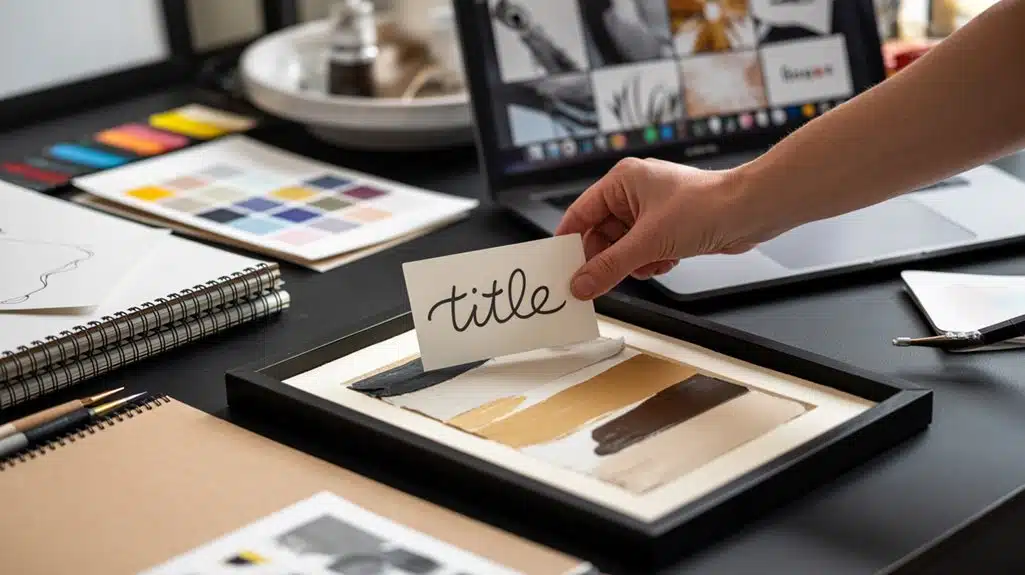
A BrandArt piece by LIST isn't given a name—it has to earn it. I wait until the form, material, and effect merge into something inseparable: Hermès Leather meets raw canvas, Asphalt Energy on gallery parquet, street language as decoded art. The title comes late, sticks in your mind immediately, and functions simultaneously as a manifesto, an identity, and a spark. It is the final brushstroke – made entirely of words. Stay tuned, and I'll show you exactly how this moment happens.

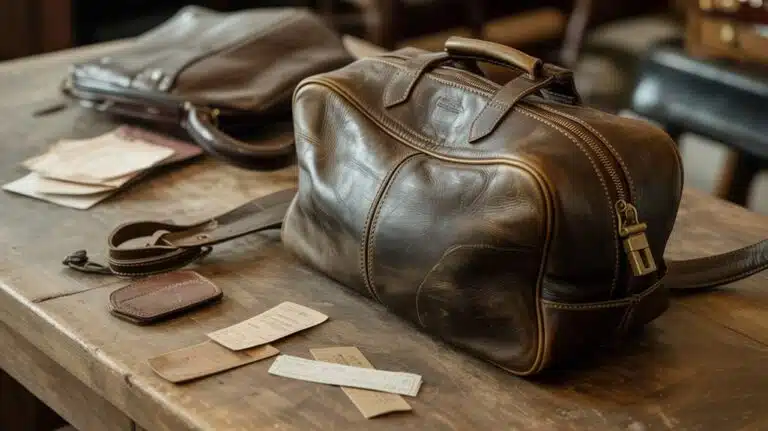
Sometimes a finished work stands before me—lacquered, loaded, alive—and yet still has no name. The canvas is sealed, the Louis Vuitton Bag Assembled, powered up. Completion It doesn't mean silence. It means: the work is already breathing even before it has a name.
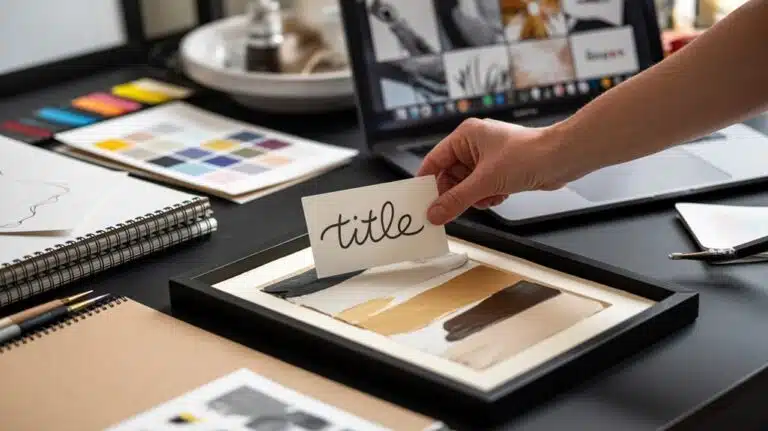
The absence of a title is not a failure. It is an open space—a moment when the work still speaks for itself, free from categories, free from classification.
In art history, the process of titling a work of art is often a subsequent step. Hermès, Prada, Dior – this Have names Weight. But a BrandArt Studio needs its own new name—one that doesn't explain, but expands upon.
Completion is a reality. The title will come when it’s earned—not before. Some truths simply can’t be forced.
A title is not a label—it is a first breath, a pulse, the moment when a work ceases to be silent.
The right name creates a memory before the eye even understands what it is seeing, and draws the viewer in, just like a Hermès Orange that draws the eye across a crowded room.
It provides guidance without closing any doors— a compass instead of a card.
Whoever names a work determines whether it will live on in people's memories. A Title It's not a label—it's a breath, a sound, a first glance.
This is especially true at Brandart Werke: A painted Hermès bag or a hand-drawn Louis Vuitton carries a lot of weight. The name has to live up to it. Distinctive shape does not mean simplicity—it means precision that lasts.
Short. Clear. Distinctive. At the same time, a strong title needs open meaning: It shouldn't give everything away, but rather invite, prompt, and intrigue.
The A Moment of Confusion It's not a mistake—it's the ticket to the debate. I never name a piece by chance. Every title that appears on a one-of-a-kind Prada or Dior piece is a A Decision Against Forgetting.
The title breathes before the work speaks. It opens a door, without illuminating the space behind it. That's its strength.
Titles of artworks do not serve as summaries—they serve as Invitation. The meaning of the work's title lies in the Hint, not in explaining. When a Louis Vuitton Bag When it meets the canvas, when Hermès leather meets acrylic paint, when Prada or Dior is placed in a new context—that’s when the work needs a title that provides direction but leaves room for interpretation.
Art and wordplay are no coincidence here. They are precision in disguise. A title suggests, conceals, provokes. He highlights one aspect—and leaves the rest to the viewer’s imagination. It is never empty. Nor is it ever finished.

My titles don't come from an encyclopedia—they come from the street, from the showroom, from that moment when Louis Vuitton meets the canvas, and something else entirely emerges.
I'm reading Color as Mood, I decipher brand language like a code, drawing connections between art history, pop culture, and that one detail that makes an object unmistakable.
A title isn't a label; it's the first brushstroke.
Everyone Title, when I give a work something, something breaks open—a label, a word, an expectation. This isn't child's play. It's a method. When Louis Vuitton When it hits the big screen, the name should be just as catchy as the Monogrammed leather Under the brush. I twist letters, shift sounds, let meanings collide. Not to confuse—but to liberate. A single altered letter can turn a whole world upside down.
Hermès becomes a challenge. Prada becomes a question. Dior becomes a dialogue. Language breaks down so that something true can shine through. Word Games Pun without substance are just corny jokes. Mine have substance, resonance, and context—asphalt over hardwood, wit over dignity, clarity over chaos. The title isn’t just a label. It is the First Rebellion.
Three sources feed into every title I give to a BrandArt-Works—Art History, Pop Culture, personal memory.
The Pyrography, an ancient craft of firing, gave BrandArt its name—fire as a metaphor, not as decoration. History is not merely referenced here; it is reignited.
Pop culture provides the parallel: Pixar was born from “pixel,” IKEA from initials and its origins—proof that a name can unfold an entire universe. My titles work the same way.
Then there’s the personal level—a place, a moment, a memory that becomes inscribed in a Hermès or Louis Vuitton item and transforms it. The luxury item becomes a symbol of identity. From Handbag It becomes an attitude. The name is not just a label. It is the work’s first gesture.
Color speaks first—even before you think of a title, even before words come into play. A fiery red on Hermès leather, a cool blue Prada Black—the color speaks for itself. I just go with it.
Warm tones push to the forefront, calling for names full of energy and tension. Cool colors demand silence, precision, and distance.
Then comes the atmosphere – not as a description, but as a judgment. A work that breathes heavily gets a different title than one that dances.
And then: that Details. A etched line on Louis Vuitton canvas—a contrast that lingers, a moment that holds the entire piece together. I reduce everything—everything visible—to a single core. The title is not merely a label. It is a distillation, a statement, a brand.

Language is not a neutral tool—it is attitude, sound, territory. When I give a work an English title, I open a different door than I would with a German one. English sounds more concise, more international, cooler—like Paint on Asphalt, like a Louis Vuitton monogram under neon lights. It shifts the focus from meaning to atmosphere, from explanation to sensation.
German, on the other hand, carries weight. It explains, anchors, and articulates. A German title on a Hermès or Dior piece comes across as Marble Under Sneakers – Unfamiliar, but precise. It creates a sense of closeness where English fosters distance.
I make a conscious choice. Sometimes a one-of-a-kind Prada piece needs that English flair—that melodic brevity that immediately comes across as international. Sometimes a piece calls for German directness – raw, honest, unpackaged.
The language of a title reflects cultural identity. It is a work’s first declaration of its place in the world.
Some songs fall by the wayside—not loudly, not dramatically, but quietly, like chalk on asphalt that the first rain washes away.
A title like „Red Bag with Flowers“ describes, but it doesn’t breathe. It names without igniting. That’s the problem.
Titles without a distinctive character get lost in the crowd—interchangeable, forgettable, defenseless.
Anyone who has a Hermès Birkin or a Louis Vuitton Neverfull Transformed into a one-of-a-kind 1/1 piece, it needs a title that carries this transformation. Not explains it. Carries it.
Generic terms alone don't work. Neither do overly general phrases. And titles that are already heavily used lead straight into legal no-man's-land—especially when genre and similarity come into play.
BrandArt by LIST exists at the intersection of the gallery and the street, between Prada and cobblestones. This space calls for titles with attitude. With character. With soul.
"Description" is not a name. A name is a promise.

A name is no accident—it is a declaration, cast in two syllables, sharp as a scalpel, warm as embers. BrandArt.
Not an advertisement. Not decoration. A Manifesto.
Two words, one collision: *Brand*—the burn, the embers, the fire that makes brands like Louis Vuitton, Hermès, Prada, and Dior immortal. *Art*—the hand that intervenes, reinterprets, and recreates.
Together, they form a language that needs no explanation.
Here's why this name lives up to its promise:
The name fits just as perfectly as the work itself: precise, unexcused, alive.
I work with a Hermès Bag, one blank canvas, an idea that hasn't yet earned a name.
Only when form, material, and effect merge into an inseparable whole—when asphalt meets parquet, when color responds to leather—does the final name emerge.
This consolidation process is not a renaming.
He is Baptism.
The open becomes the precise, the raw becomes the presentable, and the potential becomes a One-of-a-kind.
A Louis Vuitton, a Prada, a Dior—each item tells a story.
Its name makes it one of a kind.
Forever.

Naming is not the end—it is Ignition. The Title It comes last, but it's the first thing that sticks in your mind.
With BrandArt by LIST This moment is no mere formality; it is the final act of a transformation that began long ago—on asphalt, on a dance floor, on the Leather from a Hermès Birkin or a Louis Vuitton Neverfull.
The name encapsulates what the brush, canvas, and object have built together. It conveys identity, attitude, and wit.
He is Brand, Metaphor, and Manifesto in one breath.
Anyone who wears a BrandArt piece—whether it’s Prada, Dior, or anything in between—also wears its name like a second signature. Not just slapped on. Branded.
That is the difference between labeling and the art of words: A good title does not merely enhance the work—it completes it. Precise. Inevitable. Unforgettable.
With tools like Shazam or Google, you can usually find a song in a few seconds. However, if the audio quality is poor or you're searching manually, it might take a few minutes.
Yes, that happens! Some works have an original title, an exhibition title, and a catalog title—all official, all valid. The context determines which name is used in a given situation. One work, many voices.
Technically speaking, you can call your artwork whatever you want—but the original title remains linked to the artwork’s official identity, documentation, and resale history. Want to be sure? Check your purchase agreement or ask BrandArt directly.
Once it has been entered, a title remains documented in an official catalogue raisonné—although, to be honest, it isn’t set in stone forever, in case new research findings require a correction.
There is no evidence that Ralf List has used the same title twice. The available sources clearly show different work titles—each work has its own distinct identity.
So the title Not just the last mark I make—just as deliberate, just as charged, just as irrevocable as the first? A Hermès Bag Don't ask for permission. Not even the name I give her. I choose words that cut deep, that linger, that are like a Dior clasp or a Louis Vuitton-Transform a monogram into something entirely unique. The title doesn't describe the work—it completes it. Raw syllables meet fine leather. That's BrandArt.
 German German
  English
 Spanish
 French