Original, Used, Transformed: Why Patina Isn't a Flaw
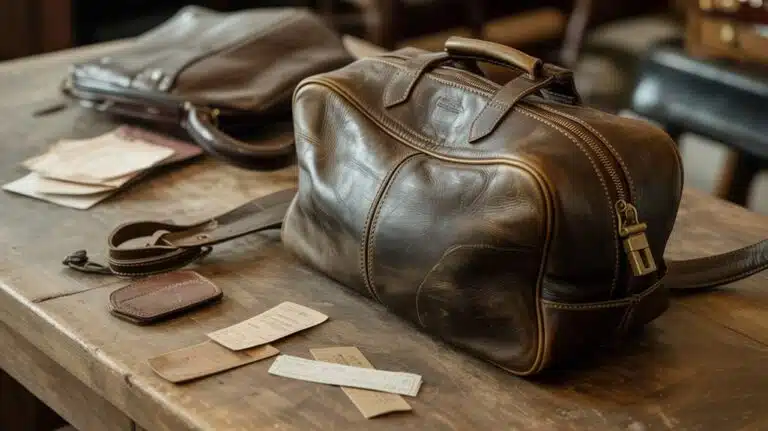
I like things that don't look like they just came out of the box. A bag that’s been worn tells a story—more so than one that’s spent its life in a dust bag. A scratch, a darker spot on the leather, a handle that’s softened over the years—to me, these aren’t flaws. They’re traces of a life lived.
When it comes to luxury, however, this sense of calm often disappears. Luxury items are polished, protected, preserved—and sometimes it’s best not to use them at all. It’s as if an object must, at all costs, look as though it has never been part of everyday life.
That's exactly where the interesting part begins for me.
After all, what is a luxury item worth if it has no history? Of course, you can name its price, the brand, the model, and the year it was made. But at first glance, those are just facts.
Things get exciting when an object has become part of someone's life.
A Bag Remembers
Maybe this bag had been on a trip. Maybe it was lying on the back seat of a car while someone was starting over. Maybe it was sitting in a hotel room in Paris or hanging from an arm that had experienced something very special that day.
Maybe it was worn too often, not taken care of properly, or simply forgotten at some point. That, too, is part of its story.
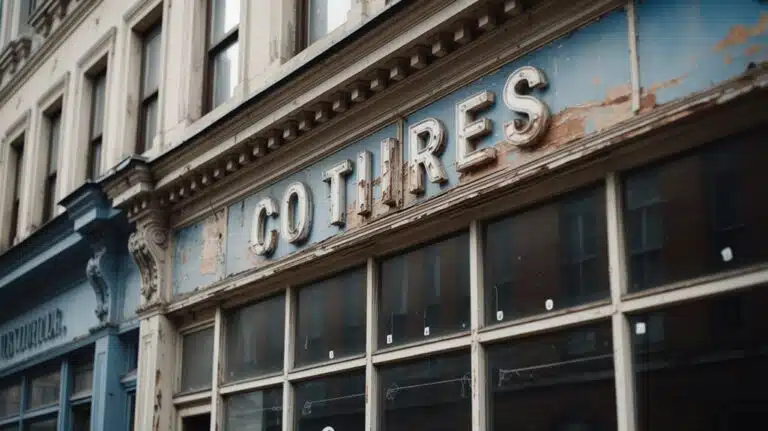
An object that used changes over time. Leather darkens, metal loses its luster, and stitching softens. Some call this wear and tear.
I call it a memory.
Patina is the memory of the material. It is created by time, touch, light, and movement. It cannot really be planned, and it is difficult to imitate convincingly.
A real trail requires a real life.
Perfection is often just fear dressed up in pretty packaging
In the world of traditional luxury, any change is quickly seen as a loss of value. A scratch can lower the price. Discoloration becomes a problem. A scuffed edge is photographed, measured, and, in the event of a sale, treated almost like a confession.
I think that's strange.
After all, we ourselves don’t become any more interesting just because we’ve remained untouched. We carry our years, our mistakes, our decisions, and our detours with us. Still, we wouldn’t automatically describe a life lived as damaged.
So why do we insist that things must have no past?
Perhaps because perfection promises security. A flawless object seems controllable. It looks as if nothing could go wrong.
But perfection is often just fear dressed up in pretty packaging.
BrandArt doesn't start from scratch
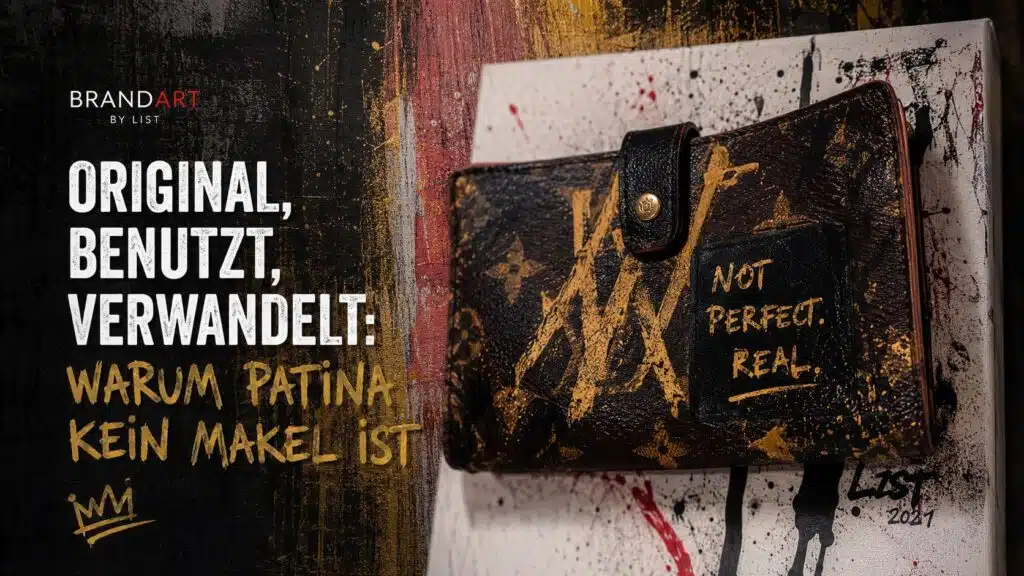
When I work with a luxury item, I don’t start with a blank slate. The bag, wallet, or accessory already has its own story—a shape, a brand, cultural value, and sometimes even visible signs of wear.
I'm not erasing that past.
I work with her.
To me, BrandArt isn't about restoring an old object until it looks brand-new again. Nor is it about skillfully hiding a scratch or painting over discoloration to make it look decorative.
It's all about transformation.
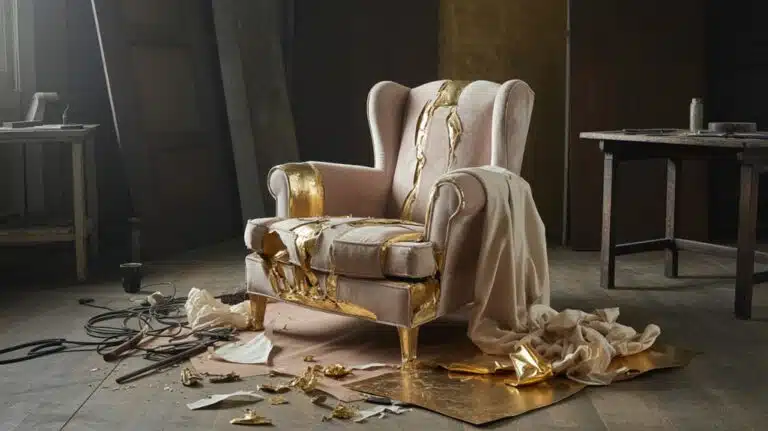
The object takes on a new setting, a new message, and a new role. The canvas becomes a stage. Color, typography, symbolism, and material enter into a dialogue.
The bag remains recognizable, but it is no longer just a bag.
Luxury Can Lose Its Airs
A luxury item often comes with certain expectations. It is meant to exude elegance, symbolize success, or signal a sense of belonging. In many cases, the brand tells half the story before the person can even say a word.
I'm interested in what happens when you disrupt this order.
What happens when the logo no longer has the final say? What happens when a bag is no longer just carried, but admired? And what emerges when signs of wear are not hidden, but become part of the artistic statement?
Then he loses Luxury Perhaps his composed demeanor.
And it takes on a personality of its own.
That is exactly the moment I'm looking for. The object is detached from its original function without denying its origins. The brand remains visible, but it no longer dominates the work.
Status becomes material. Consumption becomes commentary. An object becomes art.
A one-of-a-kind piece doesn't need a flawless surface
Some people see signs of wear and tear as a flaw at first glance. I see them as an invitation. Because where something is no longer perfect, there is room for new meaning.
A BrandArt Factory It is not valuable because everything about it is smooth, clean, and untouched. It is valuable because it cannot be replicated.
The object brings its own history with it. I add my own perspective. The two come together and become something new.
A second work may be similar, but it is never identical.
A different bag bears different marks. A different canvas calls for different decisions. Even a supposed mistake can change the course of a work.
That, to me, is exactly where the power of a one-of-a-kind piece lies.
Not damaged, but lived through
Patina is not a problem that needs to be eliminated. It is material, memory, and resistance all at once. It challenges the notion that value can arise only where nothing has been touched.
I believe the opposite.
Value often arises precisely where something has been allowed to leave its mark—where an object has been used, cherished, forgotten, and rediscovered—where it no longer has to be perfect to be seen.
It is valuable not in spite of its history, but because of it.
This text and these images were generated using artificial intelligence (AI). In the interest of transparency and in accordance with the standards of the EU AI Regulation, we would like to point out that the content was subsequently subjected to careful editorial review and human verification. The publisher bears the final editorial responsibility.
Important noteIt is expressly pointed out that the products presented on this website are pure works of art (unique pieces) and not fashion items. They are the result of an artistic transformation and are subject to the artistic freedom of the artist. No brand advertising or an official impression of the manufacturer is created. The works are clearly artistically altered as original products and are not labeled as official "brand/logo products".
To provide you with an optimal experience, we use technologies such as cookies to store and/or access device information. If you consent to these technologies, we may process data such as browsing behavior or unique IDs on this website. If you do not give or withdraw your consent, certain features and functions may be impaired.
Functional
Always active
The technical storage or access is strictly necessary for the legitimate purpose of enabling the use of a specific service expressly requested by the subscriber or user, or for the sole purpose of carrying out the transmission of a communication over an electronic communications network.
Preferences
The technical storage or access is necessary for the legitimate purpose of storing preferences that have not been requested by the subscriber or user.
Statistics
Technical storage or access for statistical purposes only.Technical storage or access used solely for anonymous statistical purposes. Without a subpoena, the voluntary consent of your Internet service provider or additional records from third parties, the information stored or accessed for this purpose alone cannot generally be used to identify you.
Marketing
The technical storage or access is necessary to create user profiles, to send advertising or to track the user on a website or across several websites for similar marketing purposes.
Your e-mail address or WhatsApp number will only be used to send you our newsletter and information about the activities of BrandArt by List. You can unsubscribe at any time using the unsubscribe link in the newsletter.
 German
  English
 Spanish
 French