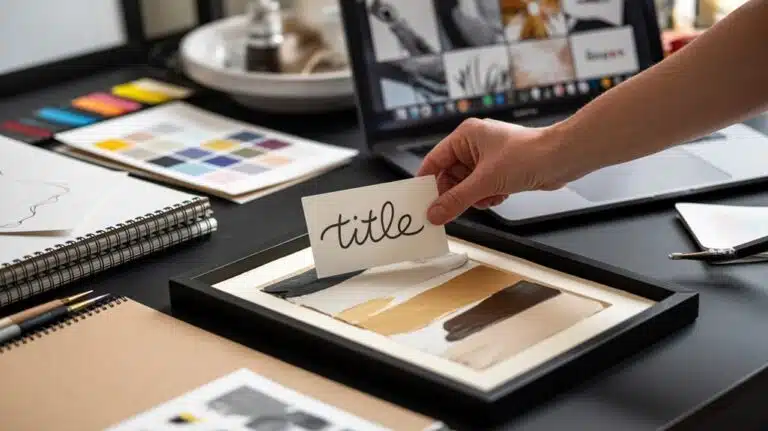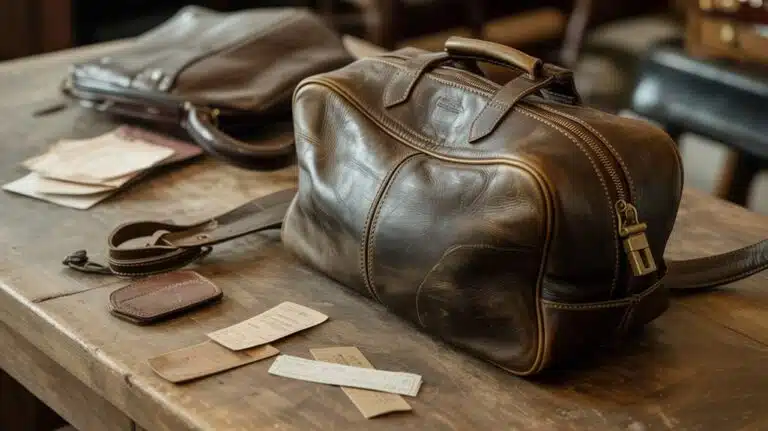

Not every Birkin deserves a second life—only the ones that demand it. I'll start with the Silhouette To: Does the form dominate the space from twenty meters away, without logos? Then the material— Patina is not damage, it is autobiographical. In the end, the subject must immediately evoke an indelible image before a single brushstroke is made. Either it carries condensed culture, which is about to explode, or it only comes with one price tag. If you want my full list of criteria, keep reading.

Not every bag calls for a second life—but some demand it. I hold a piece in my hands and ask myself: Does it have a story, or just a price tag? A Hermès Birkin whispers decades of craftsmanship into the leather; a Louis Vuitton Monogram embodies entire landscapes of desire. These aren't just accessories—they are condensed culture, which is just waiting to explode.
Limited editions are already flirting with the gallery wall. But flirting isn’t transformation. I go further—and ask whether the object bears a wound, a contradiction, a hunger worth amplifying on canvas. Not every Prada silhouette possesses this energy. Not every Dior clasp holds this tension.
When something speaks, I listen. When it screams beneath the silence – that's one thing. I pick it up off the floor of the boutique and put it where When Asphalt Meets Art, where Street Energy clashes with sculptural precision. This clash? That’s where BrandArt by LIST begins.
Before I decide on a luxury property—a Prada, a Dior, a battered Vuitton from a decade of real life—the first thing I look at is its Silhouette just as a street artist reads a wall before touching it. Hide the logo, the sheen of the leather, the brand's mythology—and what remains is either a form that dominates space or one that disappears into it. Proportions don't lie; they reveal to me whether a form can exist alongside a painted canvas, whether its contours cut through the air or sink into chaos.
Every silhouette is a choice—a statement about what remains when color, texture, and details are stripped away.
Not every shape survives this reduction. One Hermès Birkin It works right away: The silhouette is unmistakable, cohesive, and uncompromising.
Recognizability doesn't come from a logo or seams—it lies in the pure outer line. That's the test. Can I make out the shape from twenty meters away? Does the silhouette remain distinct when everything inside disappears?
A Louis Vuitton Speedy passes this test. An overloaded form fails it.
On the canvas, it's not the attention to detail that counts—it's the contour as a statement. Distinct Edges, a clear separation from the background, a form that is perceived as a solid mass.
That's not a technique. That's attitude.
Proportions are what matter most before a logo can speak—this isn't just an aesthetic argument; it's Physics of Perception.
Studies show: Shape and Silhouette rank first in the eye's evaluation filter, Brand Prestige In fifth place. Five. Even a Hermès or Louis Vuitton logo can’t save a weak silhouette—not a single curve is out of place.
What is convincing is convincing because of Proportions First: the tension of a line, the weight of a surface, the quiet authority of a clear form.
When selecting pieces for BrandArt by List, I don’t go by brand status—I go by visual authenticity. A Prada that doesn’t stand up falls flat. A Dior that doesn’t breathe comes across as insincere.
Brand prestige is heritage—form is the present. And art always lives in the present.

I never just look at the shape— I'm reading the material like a second skin—rough, honest, incorruptible.
One Louis Vuitton With a history, hers Traces like ink on paper: not as a flaw, but as proof that she lived.
But where the material disintegrates, the structure dissolves, and randomness takes over the fabric—that is where art ends before it even begins.
Before I pick up a bag, I study it—its creases, its fading, its silent confessions imprinted on the leather over years of use. A Louis Vuitton, which was worn for softness, a Hermès Handle, which is darkened by a thousand touches—these are not flaws. This is proof. Signs of wear are the autobiography that no forger can imitate, the authenticity that distinguishes a lived-in object from a showroom phantom.
Patina is time made visible, and time cannot be manufactured. A flawless bag is silent. One marked by time speaks. In BrandArt by LIST, I do not erase this story—I elevate it, laying paint over memory, canvas over confession. Imperfection becomes the foundation. The A Scar Becomes a Signature. That's not restoration. That's Rebirth.
Not every object deserves to be transformed. Material as a Decision-Making Criterion is not bureaucracy—that is my first act of curatorial loyalty. A Hairline crack in a Prada clasp, one that had become soft from moisture Dior Canvas, a Louis Vuitton monogram that’s fading around the edges—those aren’t candidates. Those are losses before the work even begins.
Condition, as a criterion for determining whether an item is suitable for loan or exhibition, means that I examine structure the way a surgeon examines bones. Mechanical Stress as a Ground for Exclusion It eliminates everything that cannot withstand transport, installation, or the charged atmosphere of a gallery—vibration, pressure, and the invisible force of movement.
But fragility isn't my only exclusion criterion. Arbitrariness kills just as silently. If an object carries no tension, no cultural significance, no story worth unraveling—then I'm out of here. BrandArt It calls for objects that put up a fight but then surrender magnificently.
Color is no accident—it is a memory, a wound, a signal that has been etched into the cultural memory long before the bag ever left the studio.
If I have a Hermès Orange or hold a Louis Vuitton Monogram canvas in my hands, I don't see any leather; I see a visual language, which embodies decades of desire, status, and urban legend.
This spontaneous image that flashes into my mind as soon as an object speaks to me—that is the only criterion that matters.
Perception does not begin with form—it begins with Color, the silent language that bypasses reason and touches something older, something cellular.
When I decide which Choose a luxury property—art deserves it, I don't rely on logic at first. I rely on my feelings. Does this spark Hermès Orange Memories? Does this Louis Vuitton canvas carry cultural significance beyond its seams?
Color, memory, cultural associations—these are not merely decorative considerations; they are the very architecture of meaning itself.
Prada black doesn't just whisper elegance; it embodies mourning, power, and restraint. Gold on a Dior surface? That is ritual, condensed into pigment.
BrandArt comes into being right here—at the threshold where color ceases to decorate and begins to speak. Where the object ceases to exist and begins to remember.
Before I ever pick up a brush, the object must speak—not whisper, not hint, but *ignite something irreversible in my mind*. That is my fundamental rule for selecting an artistic subject. A Louis Vuitton Monogram embodies decades of longing; a worn Hermès clasp captures someone's entire story. But nostalgia alone doesn't disqualify anything—nor does it prove anything. What matters is: Does this possibility apply to Designer Handbag Upcycling Art Fully formed, like a sentence that writes itself? The idea has to take shape before I can wrap my hand around it.
Prada's geometry, Dior's romanticism—these aren't just decorations; they're provocations. Art Made from Used Bags It only lives up to its name if the transformation feels inevitable, not contrived. If I have to convince myself, the object remains silent. I walk away.

When I decide which luxury item will become a work of art, it’s never by chance—it’s a Judgment. Every piece must measure up: to my eye, my intuition, my standards. Rarity matters. Authenticity is a must. An original Louis Vuitton monogram, an unused Hermès handle, the quiet weight of a Prada leather piece—these objects speak to me before I even pick up my brush.
I'll check those out Provenance like a curator and its condition like a restorer. Then comes the decisive moment: Has this object sparked an artistic vision? Not just any—a inevitable. Dior embodies irony. Vuitton embodies history. BrandArt by LIST embodies both.
Craftsmanship, scarcity, impact—these three criteria determine whether a luxury item deserves to be considered art. No compromises. No repetition. Every piece is a 1/1—One-of-a-kind, hand-signed, one-of-a-kind—a manifesto made of canvas, paint, and lived experience Luxury.
The market speaks—but I decide, whether I'm listening. Auction Information, gallery prices, trend reports: They give me a framework, never a verdict. I observe, compare, filter—and then I toss out whatever leaves me cold.
There are three questions I ask myself before an object enters my studio:
Benchmark figures help guide me. Provenance protects me. But no data point can replace the moment when a Louis Vuitton item ceases to be a commodity—and begins to take shape as a statement. Quality and frustration, effort and independence: That’s my filter. The rest is just window dressing.

Exclusion is not a weakness—it is a stance. I do not choose what merely adorns, what fills walls like wallpaper, what calms rooms instead of enlivening them. Decoration is the opposite of art. Anyone who Hermès Birkin or a Dior Saddle Bag If it serves solely as a status symbol, the game doesn't check it—and it doesn't belong in this room.
I avoid objects that use art as a veneer. As a facade. As a way to boost a brand's prestige. When Louis Vuitton Or if Prada serves only as a vehicle for attention, art remains silent.
First impressions can be deceiving. A first glance opens the door—it doesn’t seal the deal. Without perspective, without comparison, without a genuine inner connection, what emerges is not something unique, but a mistake.
I don't create objects for collectors who want to sell them tomorrow. BrandArt by LIST exists only where art remains—on the skin, on the wall, in the memory.
Self-selection isn't a marketing term—it's the unspoken rule that determines every space I enter.
A work that is truly allowed to become art does not explain itself. It asserts itself. I hold a Hermès Birkin against the light of a A Berlin Backyard Wall, and she responds with structure, story, and silence. That's the moment I'm looking for. Louis Vuitton speaks the language of asphalt when the canvas is right. Prada whispers through textures that no catalog can capture. Dior exudes poise even before it needs a wearer.
The right property has its own magic—location, quality, aura. My job isn't to persuade, but to enhance. I take what already shines and make that radiance visible.
No need for explanations. No compromises. BrandArt by LIST It is born where exclusivity meets rebellion—and both remain silent, because the work speaks for itself.
Every piece takes its own time—you can't generalize about that. I keep working until the piece feels right. Sometimes it takes hours, sometimes days. The creative process follows the piece, not the clock.
Yes, you can submit your own luxury item—it’s a key that you bring with you to the door. I’ll examine it, and if it carries the right energy, history, and soul, I’ll approve its transformation into art.
A one-of-a-kind, custom BrandArt piece currently costs 1,790 euros – and in return, you get it all: the original object, the designed canvas, the transformation, my signature, and a certificate. Not a mass-produced item, but a truly unique work of art.
„All that glitters is not gold.” I don’t work with official brand partnerships—I transform original luxury items into standalone works of art. The brands are my material, not my collaborators.
You can find BrandArt works on curated platforms such as Singulart or ArtMajeur, at Swiss luxury brokers such as NG Signature Collection, or directly from the artist—where expert guidance and exclusivity come together.
The right item chooses me—not the other way around. I don't chase after Birkins or Diors because of their logos; I chase the excitement that lives within them. The Weight of Desire, the scent of ambition, the fingerprints of a life lived to the fullest. When this energy hits my canvas, something irreversible happens. The object ceases to be possessed. It will undeniably. That is the only selection criterion that has ever mattered.
 German German
  English
 Spanish
 French