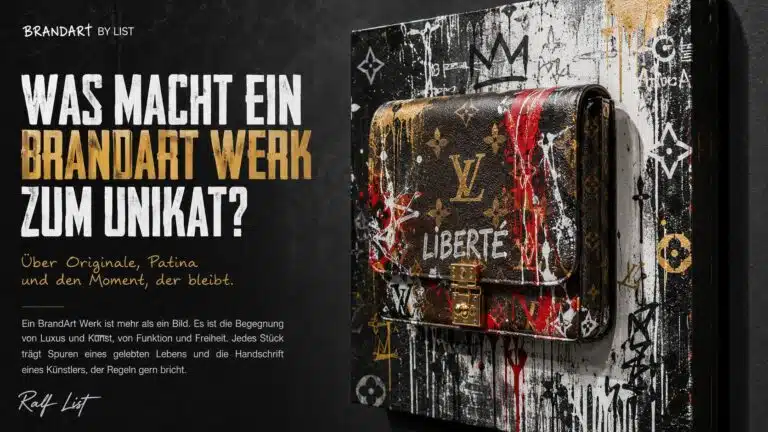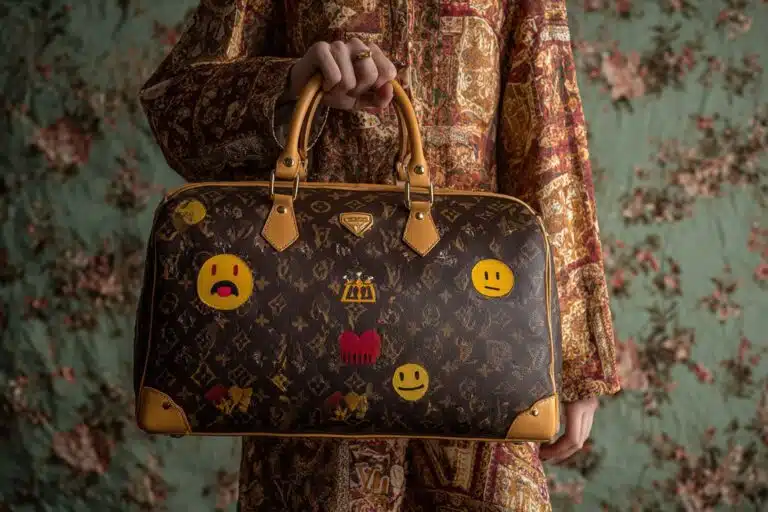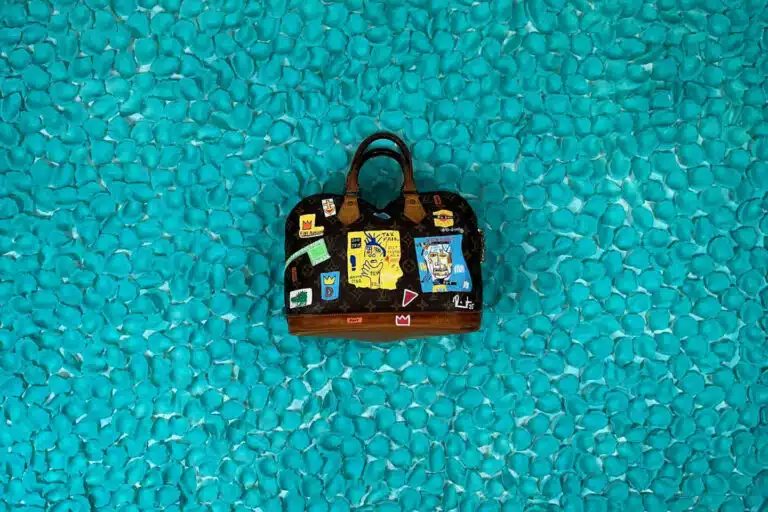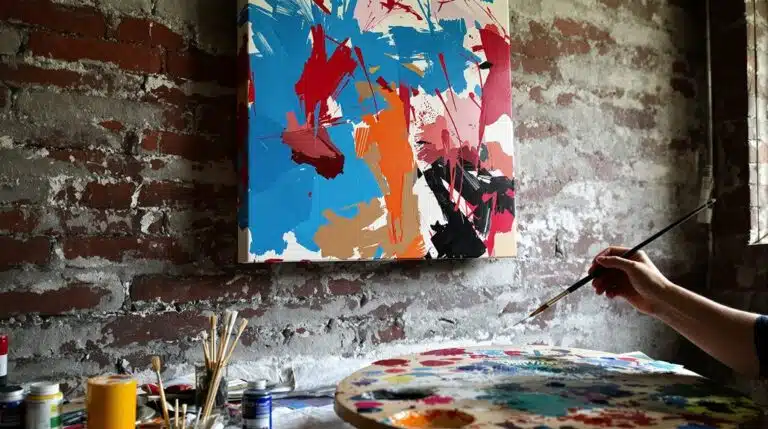
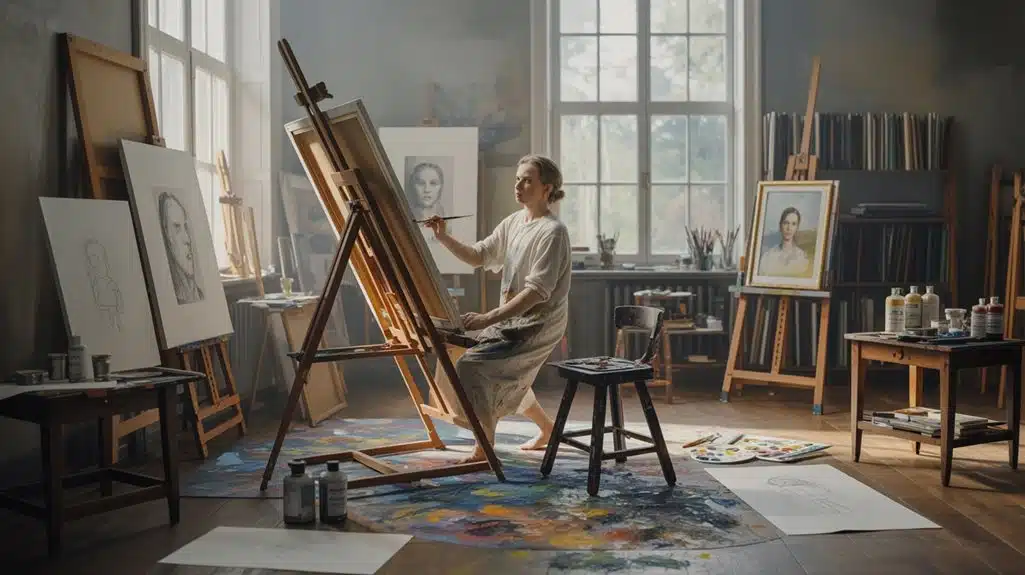
Each piece begins with a A thought that is so precise, ...that he cuts—long before I even have a paintbrush, a canvas, or a Hermès Bag I touch it. The idea comes first. Raw, unique, non-negotiable. I read the object like a manifesto: its patina, its curves, its cultural significance. Louis Vuitton, Prada, Dior—they carry a history that I reinterpret, never imitate. From the first impulse to the final brushstroke, every decision is deliberately. What follows shows exactly how.
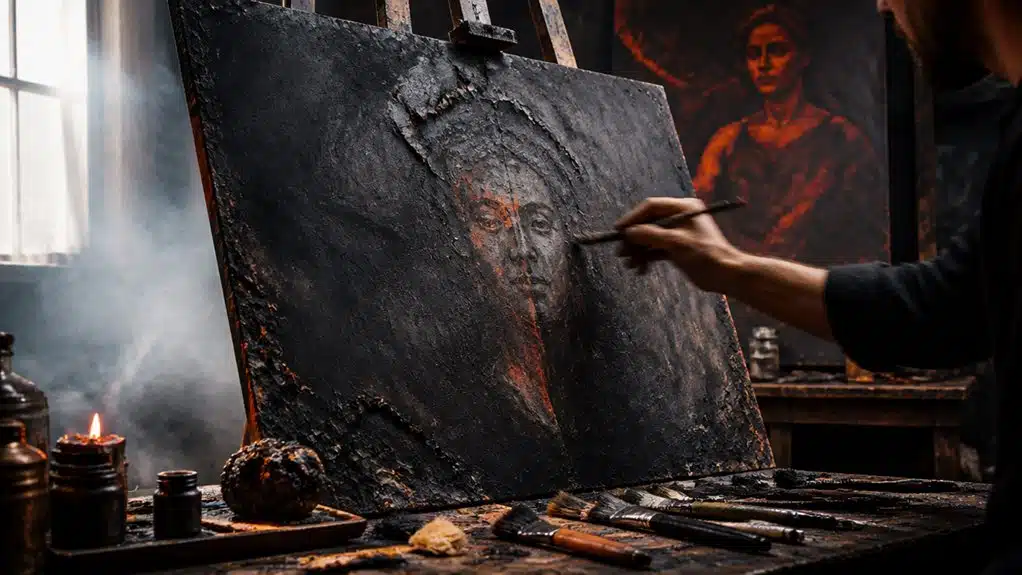
No briefing. No set plan. Just one object, an impulse, a truth that carves its own path. The creation of a work of art at BrandArt by List doesn't follow a blueprint—it follows the moment. A Hermès Straps is on the table. A blank canvas wait. What emerges in the process is neither predictable nor reproducible.
This artist’s studio report sounds intentionally different because the BrandArt production process is different. Ralf List doesn’t start with the end in mind—it starts with Curiosity, excitement and a deep respect for the material. A Louis Vuitton bag is not a blank canvas. It embodies history, style, and craftsmanship. The color meets decades of design.
No product is created here. A stance is formed here. Asphalt over hardwood. Energy over expectation. Freedom Over Form. The first thought is rarely the last—and that is precisely where the power lies.
Every object speaks to me before I make my first brushstroke—I read the curves of a Hermès flap, the Patina an aged Louis Vuitton monogram, the silence of a Prada leather piece that has known other hands.
Shape, color, material: that is the basic grammar. Then comes the feeling—the cultural resonance that such an object carries with it, whether it be desire, status, or memory—and that is exactly where my answer begins.
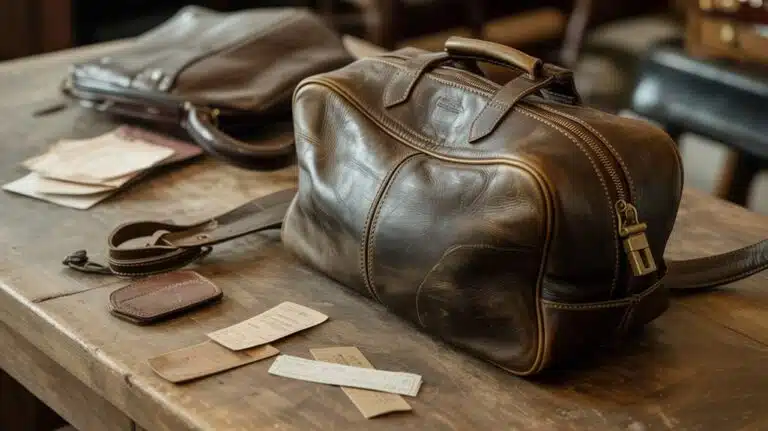
Before I even touch a bag, I take a moment to study it. Every contour tells a story. Every seam holds a memory. When it comes to art with luxury bags, it all begins with quiet attention—shape, color, material, traces. A Louis Vuitton tells her story in the Patina, a Hermès Leather It speaks through its texture and weight; a Prada strap shows me where hands have gripped it, where life has taken place.
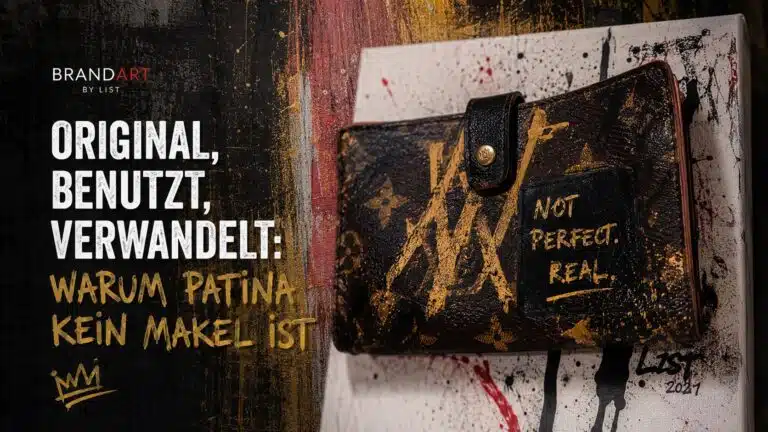
These marks are not flaws. They are invitations. I read the surface as a manifesto—changes in color as confessions, textures as witnesses. Ralf List Art does not come into being in spite of these traces, but precisely because of them. The object has already lived. My canvas responds to that – precise, deliberate, fearless. Transformation It doesn't start with the brush. It starts with the gaze.
As soon as I hold a bag in my hands, something happens before I even have time to think. A Hermès Leather speaks before I answer. A Louis Vuitton Monogram conjures up images—streets, longings, power dynamics—in milliseconds. The brain processes, before the mind passes judgment. Culturally Coded, with biographical elements, loaded immediately.
This first reading is no coincidence. It is the material for my work. Prada ensures precision. Dior trägt Begehren. Jede Tasche bringt eine kollektive Erinnerung mit – Asphalt über Parkett, Rebellion unter Eleganz, Geschichte in jedem Griff.
Ich les das Objekt wie ein Manifest: Was fühlt es? Was erinnert es? Was fordert es heraus? Aus dieser ersten, unkontrollierbaren Assoziation entsteht alles – die Komposition, die Farbe, der erste Pinselstrich.

Sobald ich das Objekt gelesen hab – seine Geschichte, seinen Glanz, seinen stillen Widerspruch – fängt die eigentliche Arbeit an: das Verhältnis zwischen Canvas und Objekt zu komponieren, als würden Asphalt und Parkett aufeinandertreffen.
Ich frag mich, ob die Leinwand das Objekt rahmt oder fordert, ob sie flüstert oder schreit – ob ein Zitat aus der Street Art auf das Erbe von Hermès oder Dior trifft und genau darin seine Spannung findet.
Form, Referenz, Proportion: drei Entscheidungen, ein Unikat.
Zwischen dem ersten Gedanken und dem letzten Pinselstrich liegt eine Entscheidung, die alles verändert: Wie verhält sich die Leinwand zum Objekt? Format ist kein Zufall. Es ist Haltung. Ich wähle bewusst, ob eine Hermès-Tasche den Bildraum dominiert oder ob sie atmet – umgeben von Fläche, Spannung, Stille.
The Drittelregel gibt Orientierung, der goldene Schnitt gibt Würde. Aber BrandArt by LIST bricht Regeln erst, wenn sie verstanden wurden. Vordergrund, Mittelgrund, Hintergrund – drei Zonen, drei Wahrheiten.
Ein Louis Vuitton-Objekt im Zentrum wirkt anders als eines, das am Bildrand verankert ist, fast fliehend. Proportion entscheidet über Nähe und Distanz, über Ruhe und Aufruhr. Komposition ist keine Technik. Sie ist die Sprache, bevor Farbe spricht.
Jede Bildidee braucht einen Anker – ein kulturelles Feld, das ihr Gewicht gibt, bevor der erste Pinsel das Canvas berührt. Pop Art. Street Art. Kunstgeschichte. Diese drei Felder sind keine Stile – sie sind Haltungen.
Warhol hat vervielfältigt, um zu entlarven. Street Art hat Wände besetzt, um zu befreien. Beide haben die Sprache der Straße gesprochen – mit der Präzision eines Manifests.
Bei BrandArt by LIST trifft genau diese Energie auf eine Hermès Birkin oder eine Louis Vuitton Speedy – nicht als Hommage, sondern als Neubesetzung. Asphalt über Parkett. Die ikonografische Sprache von Dior oder Prada wird nicht imitiert, sie wird gebrochen, verfremdet, neu erzählt.
Das Motiv entsteht da, wo Wiedererkennung auf Rebellion trifft. Bekannt. Verstört. Unvergesslich.
Die Leinwand ist kein leerer Anfang – sie’s ein Versprechen aus Stoff, Spannung und Struktur, Schicht auf Schicht gebaut wie die Identität einer Stadt.
Ich arbeite in Flächen, die sich überlagern, in Kontrasten, die reiben: rohes Gesso trifft auf das Monogramm eines Louis Vuitton, ein Hermès-Orange kämpft gegen den schwarzen Untergrund zurück.
Übermalungen sind keine Fehler, sie’re Entscheidungen – jeder Bruch im Bild ist ein Geständnis darüber, was war, bevor es wurde, was es ist.
Wer eine Leinwand aufbaut, trifft Entscheidungen – über Ruhe, Spannung, Ordnung und Bruch – bevor der erste Pinsel die Fläche berührt.
Große, ruhige Flächen atmen.
Small, dense areas draw the eye forward, restlessly, hungry for resolution.
I work with Layers, which lend depth – Foreground versus Background, Asphalt over hardwood floors.
A Hermès flap gives a composition a different look than a Louis Vuitton monogram; each shape carries its own weight.
Contrasts—big versus small, smooth versus rough, closed versus open—are not stylistic devices.
They embody attitude.
And then: the deliberate break.
The Diagonal, which shatters a rigid order.
The moment when a Prada silhouette encounters a gesture that no glossy magazine would ever have planned.
Order arises from the courage to break it.
Overpainting isn't a mistake—it's proof that a painting is alive. Every layer I apply over a previous one isn't a surrender, but a decision. A Louis Vuitton Monogram, an Hermès orange, a Prada black—they don't want perfection. They want truth.
I don't work toward a final product; I work my way through different states. The past never completely disappears: Color Noses, Traces of the original, a faint hint of color beneath—all of this is still present within the painting itself. Layer by layer Something emerges that looks as if it grew naturally, not as if it were built.
No Dior nail polish, no sidewalk, no canvas remains as it was. The brush doesn't correct—it transforms. And that is precisely where the freedom lies: in the a courageous, gradual process of becoming.
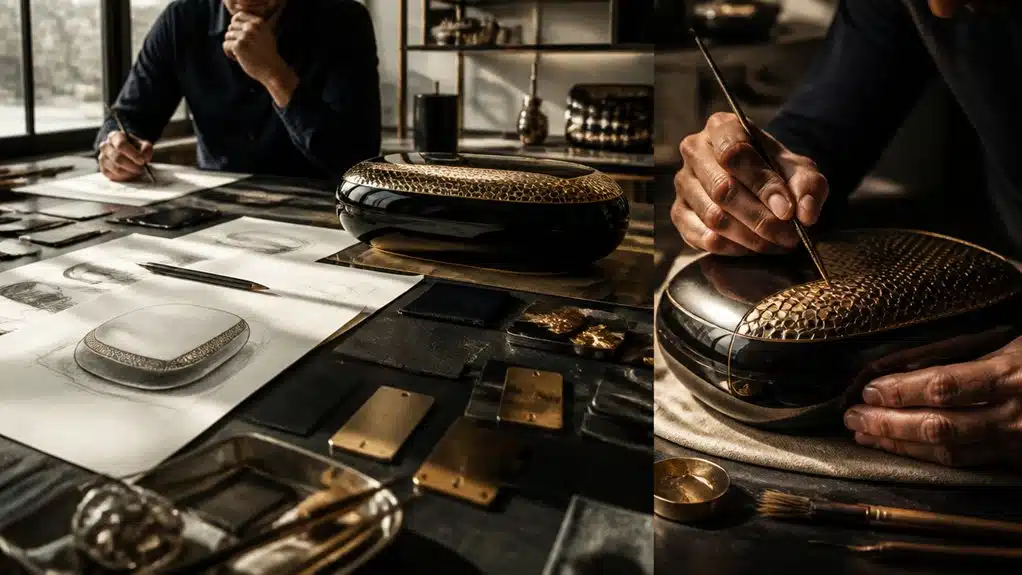
Where the piece ends up is what matters most—not just on the canvas, but in the interplay between color, form, and the unmistakable character of a Hermès or Dior. I treat every attachment as a choreographed gesture: precise, deliberately, as tense as the moment before the first brushstroke.
If Object and Image When we truly talk to one another, what emerges isn't just decoration—it's a message, raw and refined at the same time.
The location of a BrandArt facility is no trivial matter—it is the final artistic decision. Where you place a piece of furniture determines whether it “breathes” or “suffocates.” In the living room, it belongs across the sofa – An eye-catcher, a conversation starter, a declaration of power. The Image center at 150 cm. Non-negotiable.
White space is not nothing—it is pressure, tension, the pause before the next sentence. Give the work a free radius equal to 1.5 times its largest dimension. Let it dominate.
The grip follows the stance: sturdy anchors For heavy frames, museum-grade wax for sculptures meant to look untouched. A level. A clean cut. No compromises during installation—because a Louis Vuitton, a Hermès, or a Prada deserves a wall that can hold it up.
Not every object hanging next to a picture, speaks with him—most people just exchange polite, meaningless small talk.
A Hermès, a Vuitton, a Dior: They wear Iconography, History, Weight. But Gewicht allein erzeugt keinen Dialog. Das Objekt muss Teil der Bildhandlung werden – lesbar, absichtlich, unausweichlich.
Ich arbeite so, dass Form, Material und Symbolik dieselbe semantische Richtung halten, kein konkurrierendes Rauschen, keine dekorative Höflichkeit. Wenn eine Prada-Tasche im Bildkontext auftaucht, wird sie nicht ausgestellt – sie spricht.
Der Moment, in dem Betrachter*innen nicht mehr zwischen Bild und Objekt trennen können, ist genau der Moment, auf den ich hinarbeite. Keine stumme Koexistenz. Keine Illustration. Nur ein Werk, das für sich selbst spricht – laut, kohärent, lebendig.
Wenn der letzte Pinselstrich sitzt, ist das Werk noch nicht fertig – es wartet noch auf sein Zeichen. Die Signatur ist kein formaler Akt, sie ist die letzte bewusste Geste, die Urheberschaft in Farbe verwandelt. Ich setz sie unten rechts – Konvention gebrochen, Tradition anerkannt.
Dann kommt die Rückseite: Titel, Jahr, Technik, Maße. Keine Bürokratie. Beweisführung. Eine Louis Vuitton Bag auf Leinwand, ein Hermès-Objekt als Träger, ein Prada-Fragment neu kodiert – jedes dieser Unikate verdient seinen eigenen Werkausweis.
The Echtheitszertifikat rundet das Ganze ab: Name, Abbildung, Unterschrift, Datum. Dokumentation ist Respekt gegenüber dem Werk, dem Sammler, der Geschichte. Fotografier Vorder- und Rückseite, bevor das Stück die Hände wechselt – das Licht muss stimmen, der Rahmen muss sprechen. Signatur, Zertifikat und Archiv zusammen bilden die Trias der Authentizität. Kein Werk ist wirklich vollständig, bis belegt ist, wer es in die Welt entlassen hat.

Alles fängt im Kopf an – lange bevor Pinsel, Leinwand oder Tasche auch nur angefasst werden. Der Gedanke wächst still, manchmal über Wochen, wie Farbe, die in Ruhe trocknet. Kein Zufall. Keine Improvisation. Nur Vision.
Kein Zufall. Keine Improvisation. Nur eine Idee, die still wächst – lange bevor die Hände loslegen.
Drei Wahrheiten über den Ursprung jedes BrandArt-Werkes:
Prada trifft Asphalt. Dior begegnet dem rohen Skizzenbuch. Aus dieser Spannung entsteht was Drittes – weder Modeobjekt noch klassisches Gemälde, sondern ein Manifest auf Leinwand und Leder.
Jedes Werk trägt die Zeit seiner Entstehung sichtbar in sich. Das ist keine Kunst über Luxury. Das ist Luxus, neu gedacht.
Der letzte Pinselstrich ist kein Nachlassen – er ist Haltung. Ich entscheide, wann ein Werk vollendet ist, nicht die Uhr, nicht der Markt, nicht die Erwartung. Dieser Moment – Pinsel vom Canvas gehoben, Hermès Birkin darunter, Louis Vuitton Monogram das durch geschichtetes Pigment atmet – ist pure Intention, die sichtbar wird.
BrandArt by LIST lebt in diesem Moment. Zwischen Entscheidung, Disziplin und Freiheit. Die Prada Silhouette verschwindet nicht unter der Farbe – sie verwandelt sich, wird wilder, ehrlicher, lebendiger. Asphalt über Parkett. Galerie über Straßenecke. Beides, immer beides.
Ein Schlussstrich ist keine Erschöpfung – er ist Bekenntnis, Vollendung, Freiheit. Wenn ich den Pinsel bei einem Dior-Stück weglege, bin ich nicht fertig. Ich lasse es los – in deine Hände, deine Geschichte, deine Bewegung. Das ist kein Produkt. Das ist eine Entscheidung, die du trägst.
Ich kann dir keine genaue Durchschnittszeit nennen – das ist öffentlich nicht dokumentiert. Jedes BrandArt-Werk ist ein Unikat, und echte Kunst lässt sich nicht in Stunden messen.
Ob neu oder gebraucht – das bleibt offen. Was ich dir sagen kann: Ralf List arbeitet mit originalen Luxusobjekten. It is their authenticity that truly brings every BrandArt piece to life.
Yes, you can bring your own bag—that beloved, well-worn beauty of yours—and I’ll transform it into a stunning 1/1 BrandArt original, where the personal story behind your piece drives the artistic vision.
Every BrandArt piece comes with a hand-signed certificate of authenticity that I issue personally. It lists the title, materials, year of creation, and a unique serial number—so you can be sure that your one-of-a-kind piece is truly unique and officially certified.
Forget dusty vaults—BrandArt is breaking out and taking the world by storm Germany (NordArt Büdelsdorf), which Czech Republic (Mikulov), France, Italy, Sweden and the Switzerland. I'd say this is less of a „gallery“ and more like *global liberation in leather and canvas*.
The final brushstroke isn't an ending—it's a statement. Some people think, BrandArt is decoration; it isn't. It is Confrontation: a Louis Vuitton, a Hermès, a Dior, deprived of their obedience and rebuilt as a testament. I don't finish a work when it looks finished. I finish it when it ultimately means something. That's the difference between doing and saying. And I'm always saying something.
 German German
  English
 Spanish
 French