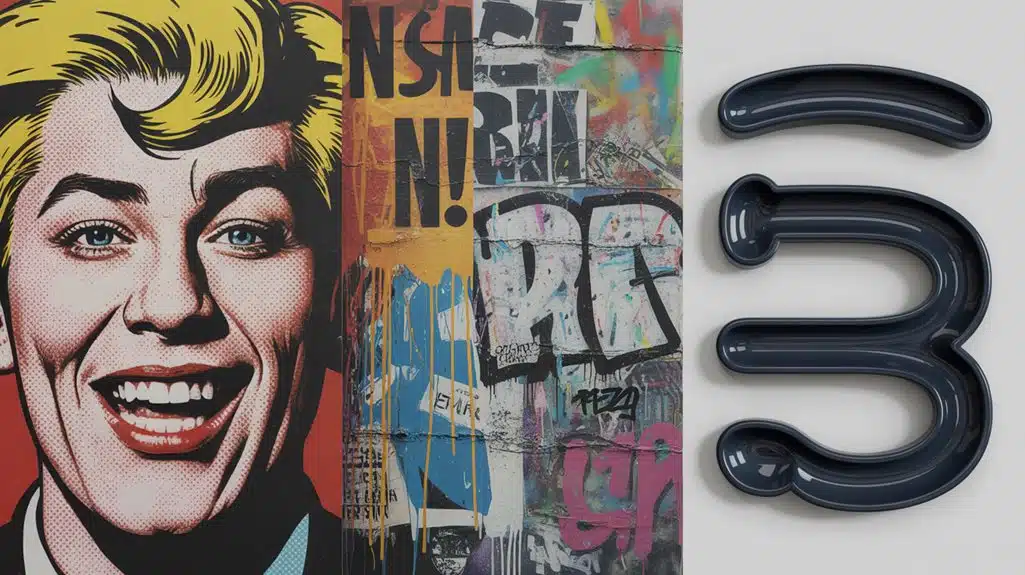
Pop Art aestheticizes consumer culture from within museums; Street Art screams from the concrete and facades, unauthorized and alive. BrandArt by LIST moves between both worlds without submitting to either. It physically transforms original Louis Vuitton, Hermès, Prada, and Dior pieces into Autographed, 1/1 portable works of art – The directness of the spray can meets the craft of the saddler; asphalt meets parquet. These are not reproductions. They are charged artifacts that embody history, intervention, and identity all at once. What sets them apart goes deeper than aesthetics—and there’s more to come.
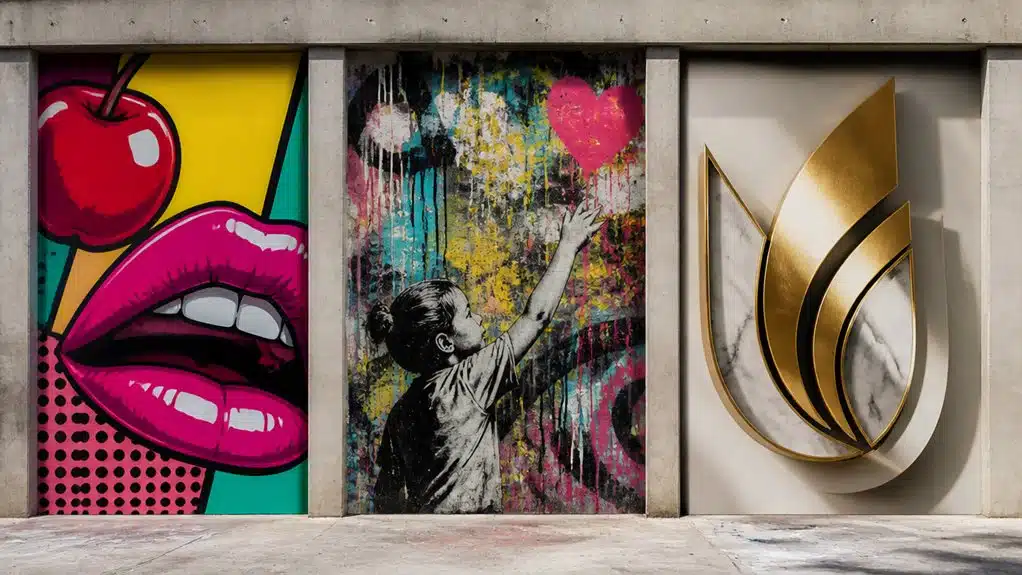
Pop Art, Street Art, BrandArt—three terms that are often mentioned in the same breath, as if they were siblings who shared the same father: the street, the crowd, the image. But siblings aren’t identical, after all. Pop Art entered the gallery and turned consumerism into an icon—seriality as a statement, repetition as a critique.
Street art has defied convention, sprayed truth onto concrete, and rebelled without invitation.
BrandArt by List takes a different approach: It combines the two. A Louis Vuitton Bag meets hand-painted canvas, Hermès meets the urban brushstroke, Prada and Dior are reinterpreted—not copied, but transformed. Asphalt Meets Parquet. That's no coincidence—it's a matter of attitude.
All three concepts blur the same boundary—between everyday life and art, between consumption and commentary. Only BrandArt turns this into a A portable, hand-signed one-of-a-kind piece. The object is alive. You drive its movement.
Pop Art brought the world of consumerism directly onto the canvas— Brand Logos, celebrities, soup cans—everything became a motif, a symbol, a statement.
It was repetition as a principle: the same image, ten times, a hundred times, until familiarity itself became criticism.
Clean lines, bold colors, biting irony— Pop Art spoke loudly, directly, and on behalf of everyone.
Campbell's Soup, Coca-Cola, Marilyn—those weren't coincidences; they were statements. Pop Art has torn open the world of consumerism and laid bare its beating, commercial heart. It didn't whisper—it screamed, through Mass Media, has borrowed the language of advertising, the tabloid press, and television to create something electrifying and defiant.
Familiar pictograms became the raw material: Soup cans on Altarpieces elevated, with Coke bottles revered like relics. Pop Art realized that mass culture isn’t inferior to art—it *was* art, just in a different guise. It took the factory floor and hung it in the gallery.
The familiar became radical. The Ordinary Became Iconic. Where society saw only products, Pop Art saw power—the silent, relentless power of images that shape desire, identity, and everything we believe we are free to choose.
Repetition was never passive—in the Pop Art It became a weapon, a mirror, a manifesto—pressed into rows of identical soup cans and silk-screened faces.
Repetition laid bare the cold machinery of consumption: the same image, the same product, the same seduction. That is the difference between Pop Art and street art—Pop Art remained in the gallery, analytical and ironic, while the street bled raw.
Irony was Pop Art's sharpest blade, cutting through the glamour of advertising with a grin rather than a scream.
Vibrant primary colors, sharp black outlines, no shadows—visual clarity as an act of rebellion.
Every image hit home immediately, like a billboard that knew it was lying.
No ambiguity. No excuses. Just the brutal, beautiful flatness of a world reduced to its most recognizable symbols.
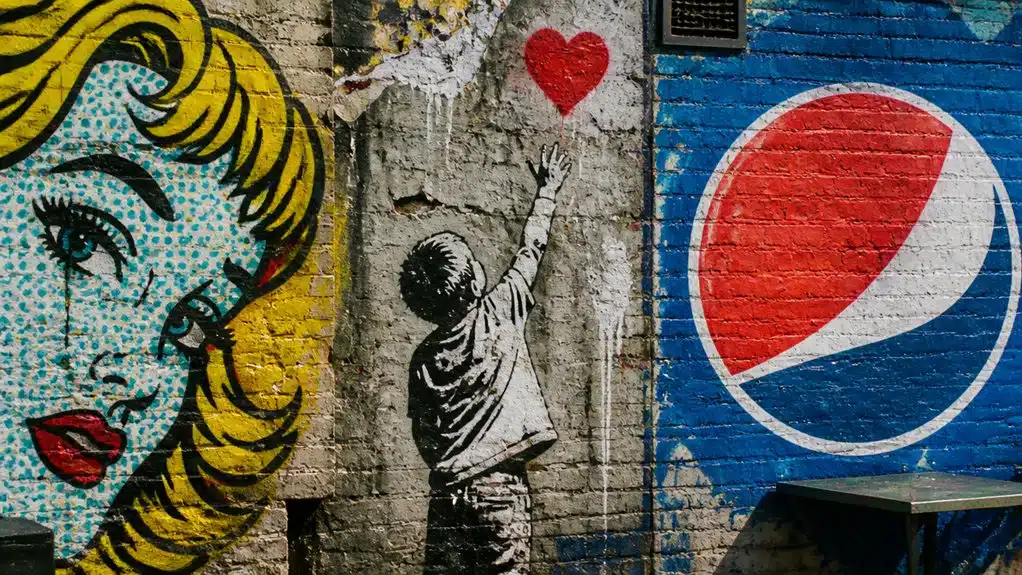
Street art thrives on asphalt, not on hardwood floors—it challenges, disrupts, and speaks loudly through stencils, figures, and lettering that no one can ignore. It is commentary, protest, and statement all at once, imprinted directly onto the urban landscape, where every passerby becomes an unwitting audience. No invitation, no admission fee, no framework—just Wall, Color, and Truth.
Where the gallery walls end, the city begins—raw, unfiltered, and brutally honest. Street Art She doesn't ask for permission; she draws attention to herself and transforms public space into a living manifesto, written in pigment and rebellion.
Facades speak. Electrical boxes scream. The asphalt becomes a dance floor for those brave enough to look down.
That is Directness in its purest form—no curator, no ticket, no bouncer. A Banksy On a crumbling wall, it reaches thousands before a gallery opens its doors.
And below that? Social Commentary, sharp enough to cut through the noise—challenging consumerism, dismantling comfortable hierarchies, and forcing passersby into an uncomfortable confrontation with the truth. Street art doesn’t decorate the city. It interrogates it—loudly, deliberately, and without apology.
Before even a single drop of paint hits the wall, Street Art She had already made her decision long ago—bold, decisive, unforgettable. Typography is not merely an ornament here; it is identity, manifesto, territory. One day is enough to define an entire mindset.
Stencils divide the world into “before” and “after.” Cardboard meets asphalt, color meets silence—and suddenly a wall begins to speak. The visual language: military, precise, unexcused.
Characters expand this universe into the figurative realm—animals, masks, faces from comics and memory. Minimalist. Stylized. Instantly recognizable.
Street art works with Reduction as a Weapon: Icons, symbols, short words, which catch your eye from thirty meters away. This is where the visual code is born that BrandArt by LIST brings to the world of Louis Vuitton, Hermès, and Dior—from the street to eternity.
BrandArt draws on logos, irony, and pop culture symbols— Louis Vuitton, Hermès, Prada, Dior—and transforms them from Status symbols in statements that are at once jarring, provocative, and seductive.
Where Pop Art has been printed and Street Art has been spray-painted, I reach for the original luxury item itself: The bag isn’t a motif—it’s the material— three-dimensional, tangible, unmistakable.
Asphalt meets hardwood, The Gallery Meets the Street, and from this deliberate friction emerges a one-of-a-kind piece worn by those who understand that art doesn't need a frame—it needs a wearer.
Pop Art never asked for permission—it just Logos He tore them down from billboards, pinned them to canvas, and challenged the art world to look away. BrandArt This rebellion stems from LIST. But where Pop Art observed from a cool distance, BrandArt draws Louis Vuitton, Hermès, and Dior into a direct confrontation with color, identity, and Irony.
Three forces are driving this clash:
The result is not homage. It is reinterpretation. Each one-of-a-kind piece transforms a luxury item into a powerful statement, where asphalt meets hardwood floors and the brand’s mythology yields to the artist’s vision.
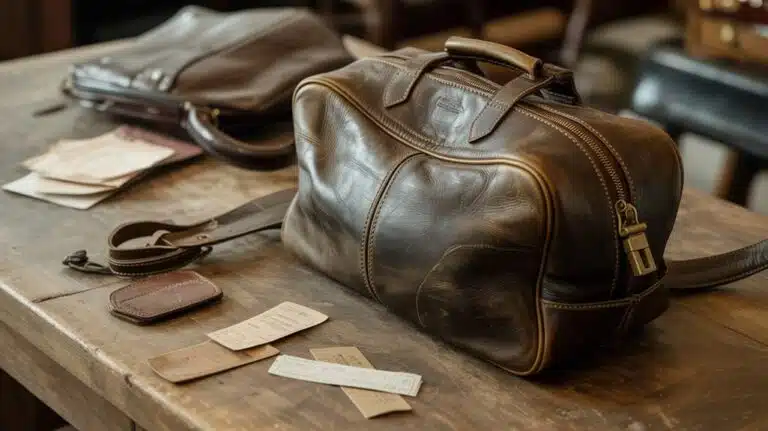
Irony will only get you so far. At some point, you need the real thing—not a reproduction, not a logo stolen from a magazine. BrandArt by LIST builds on the Three-dimensionality of the original object and places a real Louis Vuitton—a Hermès or Dior piece should be incorporated into the composition as a sculpture, not as a symbol. Feel the weight of it. The Materiality and Surface – Lacquered leather, precision-crafted hardware, the cool elegance of metal—these aren’t merely decorative touches; they are structural truths.
Every texture embodies memory, status, and contradiction. And that's exactly what it's all about. That A luxury property as a symbol of authenticity transforms the handbag from a consumer product into a charged artifact—raw, real, one-of-a-kind. Not freedom bought with money. A presence earned.
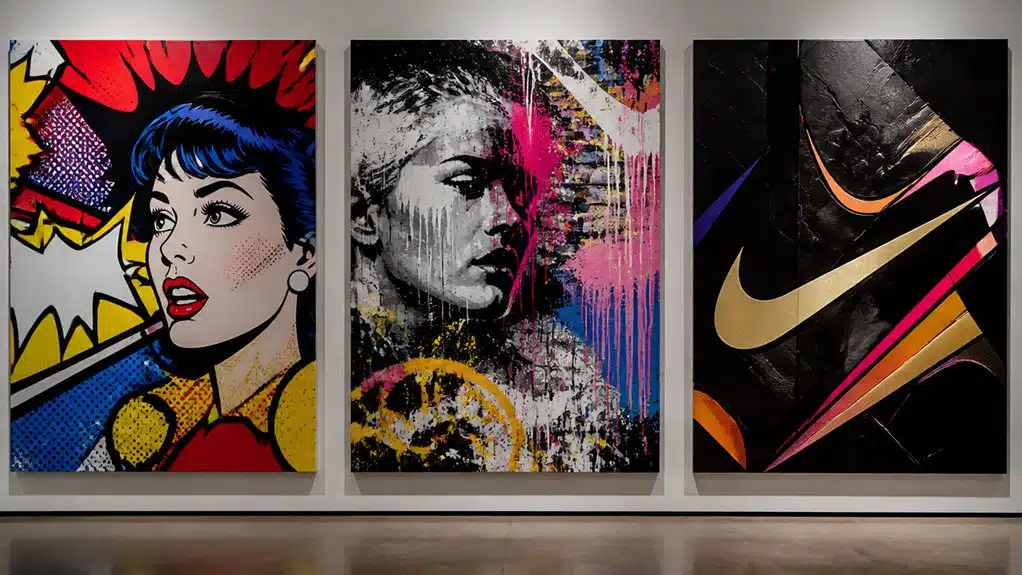
All three art forms share a common DNA: they make the everyday visible, the familiar seem strange, and the commonplace meaningful.
Pop Art references the world of consumerism with cool irony. Street Art uses the asphalt as a gallery. BrandArt by LIST combines both—and carries a Hermès Birkin or Louis Vuitton Bag as a three-dimensional manifesto.
The differences lie in attitude, location, and intention:
What all three have in common: a strong visual language, social commentary, and an immediate impact.
But only BrandArt creates a one-of-a-kind piece that you wear, live, and embody. No printing. No scanning. A single, autographed work – on your shoulder.
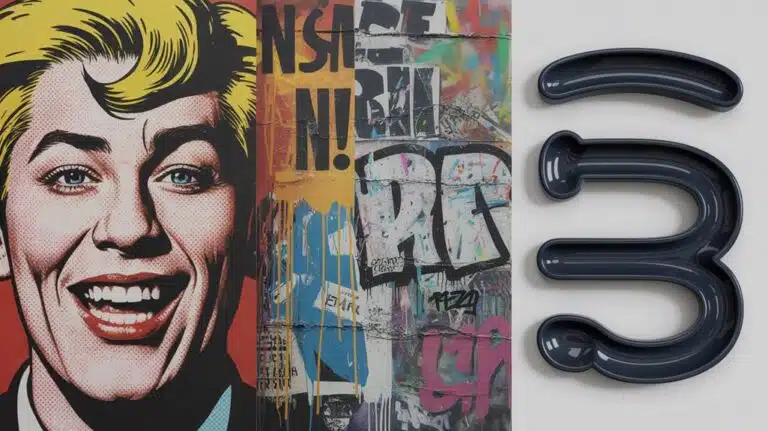
Historically speaking, Pop Art and street art have never spoken the same language—one whispers in a museum, the other shouts from a building’s wall. Pop Art references luxury brands like Louis Vuitton or Hermès with cool irony. Street art tears them down from their pedestals.
BrandArt by LIST does both at the same time.
| Dimension | Pop Art | Street Art |
|---|---|---|
| Location | Gallery, Canvas | Asphalt, Facade |
| Posture | Aestheticization | Confrontation |
| Service life | Permanent | Fleeting |
Here, a Prada bag isn’t just advertised—it’s transformed. A consumer item becomes a vehicle for a statement; a surface becomes skin. BrandArt brings the energy of the street into the studio, combining the directness of spray paint with the precision of a Hermès saddler. Dior meets Manifesto. Asphalt meets hardwood. The one-of-a-kind piece isn’t created in spite of its origins—but because of them.
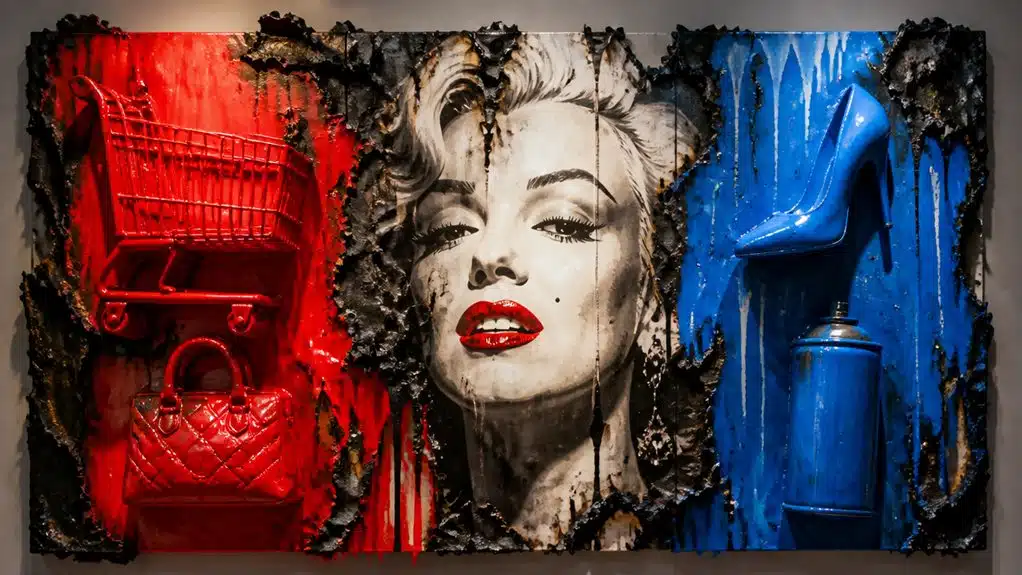
If you just mix Pop Art and street art together, you don't get a new style—you get noise.
BrandArt is not a quotation. It is a distinct artistic logic built on three pillars:
Pop Art deconstructed consumerism from a distance. Street art intervened in urban spaces through contradiction.
BrandArt by List does neither one nor the other—it unites the wearer, the object, and the image into a vibrant work of art. Not a mix of styles. A new form of expression.
Pop Art and Street Art They share a surface—but a surface is not the same as substance. Pop Art It emerged as a critical reflection of consumer culture—cool, iconic, museum-worthy. Street art burst forth from the urban asphalt—rebellious, ephemeral, site-specific. Related in visual language, yet distinct in origin, method, and intention.
BrandArt by List does not exist between these worlds—it straddles both. An original Hermès bag meets gestural canvas. A Louis Vuitton object becomes a vehicle for meaning. Prada and Dior shed their status as mere brands and gain something rarer: artistic identity.
That's not a quote. It's not a pastiche. It's Transformation - Luxury Properties, which leads to autographed by hand 1/1 One-of-a-kind pieces ...are carried, felt, lived. Kinship does not mean sameness. And sameness was never the goal.
I can't give you an exact number—there's no confirmed global total. What I can tell you is that there are currently at least 10 of Ralf List's BrandArt works publicly listed on Singulart.
The stars of my BrandArt pieces? Above all, Louis Vuitton, Chanel, Gucci, Prada, and Dior – Brands whose logos you recognize instantly and which I reinterpret artistically in order to Luxury and to make rebellion tangible.
Oh, it doesn't take *forever*—just somewhere between a few hours and several days, depending on the complexity, layers, and size. Every one-of-a-kind piece requires its own timeframe; true artistic freedom simply can't be rushed.
You can find BrandArt works right in the BrandArt by List's Online Gallery – You can buy there as long as a piece isn't marked as sold. As far as we know, there isn't currently a physical exhibition space.
I’ll just say it straight out: A one-of-a-kind BrandArt piece increases in value when exhibitions, provenance, and rarity all come together—imagine your work first hanging in a gallery, then in a collection. That changes everything.
More than 60 % of luxury consumers under 40 say that cultural identity drives their purchases more than brand prestige alone. This shift is important. BrandArt It doesn't borrow from the irony of Pop Art or the rebellious spirit of street art—it builds something that neither of them could achieve on its own. It transforms a Hermès scarf or a Dior silhouette into a lively statement, worn on bodies that become a gallery. In the end, the street and the salon share the same wall.
 German German
 English
 Spanish
 French