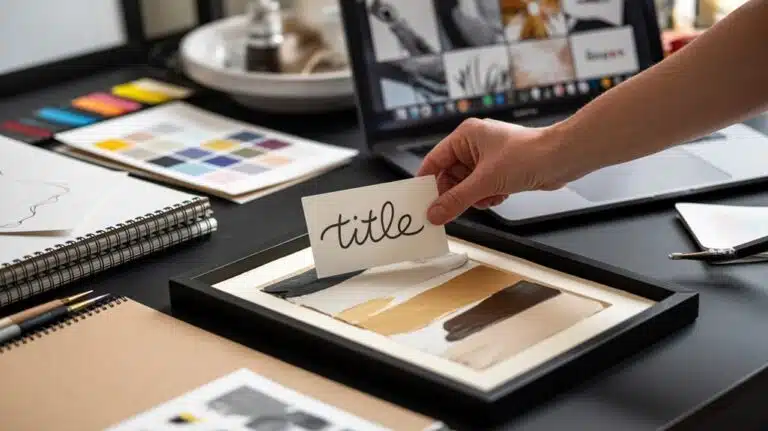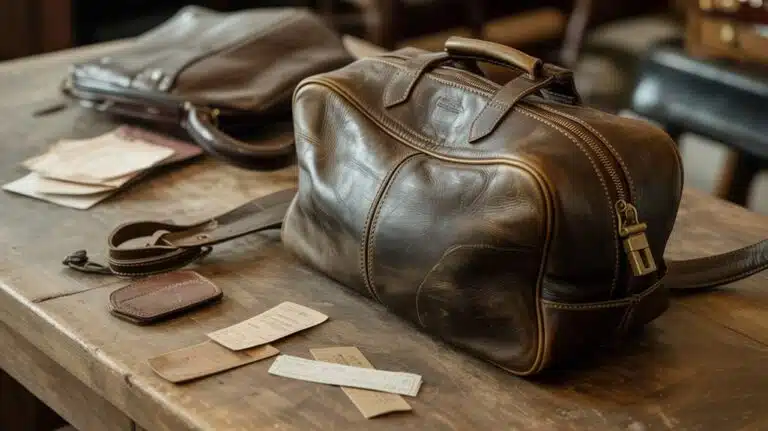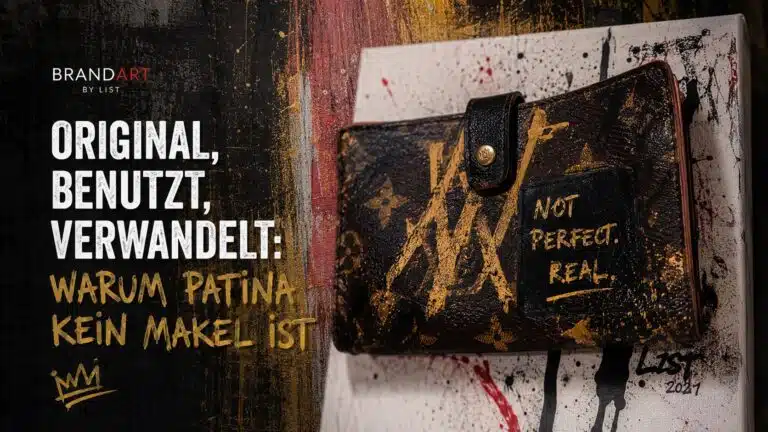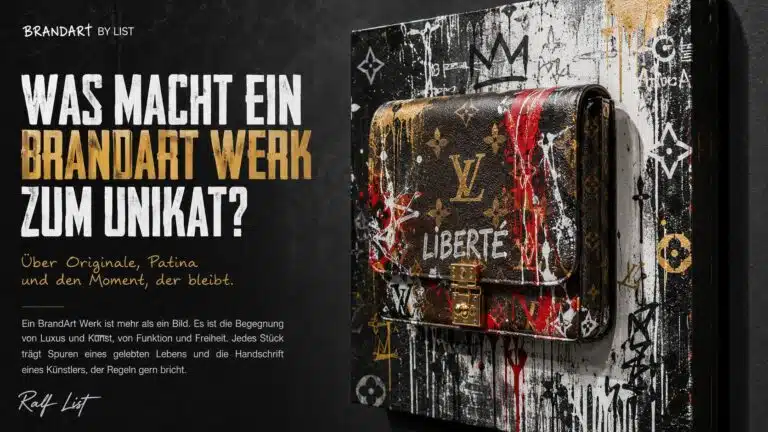
The Louis Vuitton "Monogram" still catches your eye in a matter of milliseconds—automatically, commanding, non-negotiable. But I don't let the sentence finish. BrandArt by LIST applies asphalt-textured brushstrokes over inherited prestige, painting over without erasing, admiring without obeying. Hermès, Prada, Dior—their influence remains beneath the pigment. The logo becomes a character, not a commander. Authority shifts from the fashion house to the hand. Keep going—there’s more to discover.
Before you even read a single word on a label, your brain has already decided how it should make you feel. That’s not marketing—it’s neuroscience, and that’s exactly the tension I work with.
Within 400 milliseconds arrives Louis Vuitton Monogram, an Hermès H, a Dior Serif—each and every one of them, before the language even awakens. Color First. Form comes second. Emotion comes third. Meaning comes last. This hierarchy is biological, not a matter of choice.
In art, a logo is not decoration. It is detonation.
When I let brands and art clash head-on— Canvas vs. Leather, Spray Against Embroidery—I don’t celebrate the logo. I question it. I hold it still long enough for you to see what it does to you before you even realize it’s doing anything at all.
Art featuring designer logos reveals the mechanism. The Prada Triangle, the LV-Bloom—torn from their pedestals, reframed, they become Prove. Raw, beautiful, undeniable evidence of how identity is formed in silence.
If you have a Hermès logo You see, you can't hear a single word—and yet it promises you everything: Status, Crafts, a sense of belonging to a world that not everyone can enter. The promise isn't in the leather—it's in the expectations that have been burned into your subconscious over decades.
BrandArt by List explores precisely this invisible pact—between Louis Vuitton and desire, between Prada and prestige—and reimagines it on the big screen.
A brand is not just a logo—it is a A promise stitched into leather, molded in lacquer, due to the weight a perfectly crafted clasp there are rumors. Hermès conveys trust. Louis Vuitton signals a sense of belonging. Prada signals precision. These Luxury Brand Pop Art Moments the factors involved in recognition are cultural contracts, written in Thread and Silence.
But a contract can be rewritten.
BrandArt by List comes into play right here—where status stops being a performance and starts to actually mean something. Ralf List takes a Dior piece that you’d normally keep behind glass and breathes new life into it. Quality becomes a canvas. Belonging becomes a statement you *make yourself*, not one you inherit.
Status has always been just the surface. BrandArt peels it away, reveals the architecture beneath, and rebuilds it—as something only you could wear.
What does a logo actually promise—before you’ve even touched the product, heard the name spoken aloud, or stepped into the store? It promises a world. A condensed version—vision, personality, history, all folded into one a single character. Louis Vuitton, Hermès, Prada, Dior: these aren't just letters. They are Architectures of Expectation, built on decades of consistent appearance, behavior, and language that work in harmony. The The symbol comes first. It shapes what you feel before you think. But this is where it gets interesting for me: exactly this Invisible Contract Between the symbol and the spirit lies the point where BrandArt by LIST comes into play. I don’t ignore the coded weight of the logo—I inhabit it, redirect it, and make the expectation visible. The promise remains. The power shifts.
I'll take a Birkin, a Classic Flap, a Speedy—and I refuse to call them Status symbol leave it as is.
The Logo becomes the first line of a story that I continue to write on canvas: Color Meets Irony, Kontrast picks up where Prestige left off.
Hermès remains Hermès—but now it’s having a conversation its creators never planned.
Every logo carries a weight it didn't choose—stitched into leather, embossed on gold hardware, whispered through decades of desire. Louis Vuitton. Hermès. Prada. Dior. These names already carry a lot of weight. But I’m not retelling their story. I’m giving it a new twist.
The logo remains visible. It simply loses its monopoly on meaning.
In a BrandArt piece, the Monogram about a character—not the narrator. I build the story around that: raw canvas, layered pigment, visual tension that draws the eye beyond the brand and into something that is harder to put into words. Status. Longing. Contradiction.
The symbol still represents culture. But now it represents *mine*.
That is the shift—from a symbolic emblem of heritage to a living image, From Product to Portal, from the possessed to the completely transformed.
Deprived of its original authority, the logo does not disappear—it is reassigned. Color comes first. Irony follows, sharply and deliberately. Then Contrast keeps everything in its place – Asphalt over hardwood floors, rebellion over deference.
In BrandArt by LIST A Louis Vuitton monogram doesn’t give orders. It engages in conversation. An Hermès orange serves as a counterpoint, not a crowning touch. Prada’s geometry meets raw expression; Dior’s elegance clashes with street-level authenticity. The canvas doesn’t flatter the brand—it challenges it.
Complementary colors burst forth where obedience once reigned. Humor cuts through where seriousness once ruled. Three forces—color, irony, and contrast—dismantle inherited prestige and rebuild something more vibrant, something that is uniquely yours. The brand is still around. But now she responds to art.
Painting over a Louis Vuitton bag isn't an act of erasure—it's a conversation, bold and unfinished.
I don't silence these voices; I respond to them, show raw emotion about engineered prestige, until something new begins to breathe between the two.
Admiration and contradiction coexist here, sewn into every canvas like asphalt pressed against silk.
If you apply paint to a Louis Vuitton-When you apply paint to the canvas, you're not erasing Vuitton—you're entering into a dialogue with him.
The Monogram It doesn't disappear. It layers beneath, breathing beneath the acrylic and intention—a spirit that shapes everything above it.
Covering up is not the same as erasing. The material remains. The legacy remains. What changes is the authority.
Hermès leather still bears its history beneath every brushstroke—the pigment does not erase its prestige; it reframes it.
That is the difference worth noting: delete Removed, painted over, transformed. One silences. The other diverts attention.
With BrandArt by LIST The Prada label isn't buried beneath the color—it's context. The original remains as a foundation, as tension, as meaning. The brand loses its authority. But it never loses its presence.
Admiration and contradiction are not opposites—they are the same nerve firing twice.
When I have a Louis Vuitton, a Hermès, a Prada I don’t erase what she was. I let her remain visible, proud, undeniable. The mark remains. But something shifts beneath it, just as asphalt slowly and inexorably breaks through the hardwood floor.
A legal objection It doesn't kill a brand—it keeps it in limbo, under scrutiny, alive in the debate.
BrandArt by LIST strikes the same chord. The Dior monogram doesn’t disappear—it’s perceived differently, captured within a frame it never chose for itself. Admiration and Contradiction, Presence and Refusal.
Three forces, one object. The bag still bears her name. It just doesn't carry the same authority anymore.
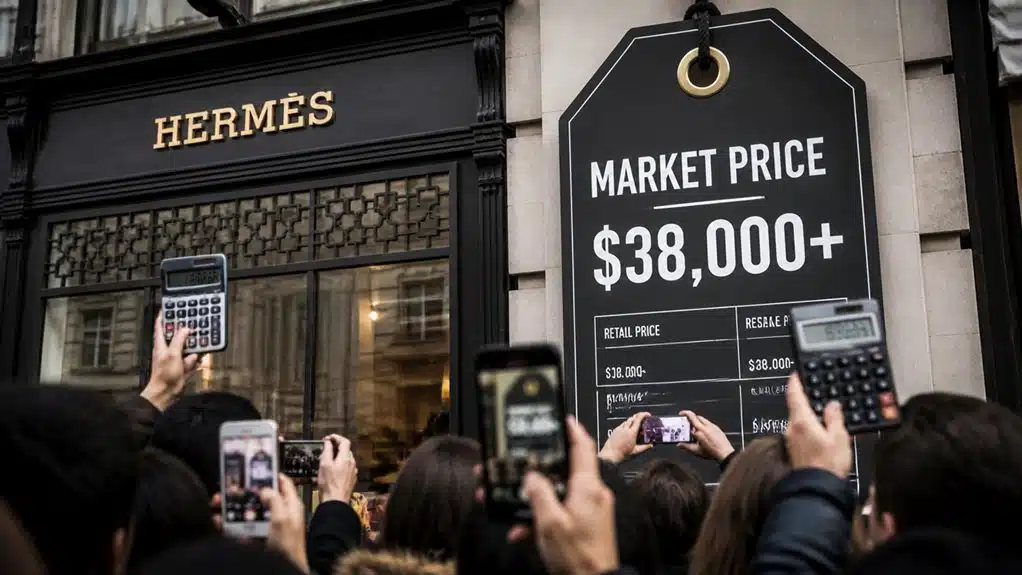
Brand value doesn't exist in a boardroom—it exists in the mind of the person who decides whether a Hermès Birkin the reverence, the price, that the myth is worth. Louis Vuitton doesn't set that value. You do. The Market That's what matters. The moment of realization, of desire, and of decision—that's what matters.
BrandArt by List enters precisely this charged space—between perception, provocation, and personal truth. When a Prada bag becomes a painted canvas, when Dior leather meets raw brushstrokes, the original brand remains present. But its authority dissolves. What emerges is a negotiated value: between the creator, the object, and the person who claims it as their own.
Reputation is on the rise. Transformation Multiplied. The carrier completes it.
This is where List works—not against Luxury, but beyond its hierarchy. The street rewrites the gallery wall. Asphalt over hardwood. And the final word on value? It doesn’t belong to any label. It belongs to you.
A brand doesn't whisper—it commands, categorizes, and claims its territory, before you've even touched the object. Louis Vuitton Don't ask for permission. Hermès It's not up for debate. This authority is real—and BrandArt by LIST dives right in.
Not to give in. But to rewrite.
These aren't decorations. These are confrontations— Objects, Freed from Their Obedience and rebuilt as personal territory.
The brand's presence remains. Its authority does not. What remains is brand recognition. What changes is ownership—not legally, but emotional, cultural, undeniable. You wear it. You make it complete. The work begins with LIST. It all comes down to you.

What I've learned—after doing a Hermès Bag I placed it against a piece of raw canvas after I saw how Color about a Louis Vuitton Monogram It creeps along like a slow reconquest—is that what it is: the The logo deserves its place, but it certainly doesn't set the rules anymore.
The logo deserves its place. But the rules? They belong to the hand that holds it.
It appears. It sends signals. It anchors itself.
But the meaning? That lies in the work, in the hand, in the moment of transformation. A Prada Silhouette speaks no louder than the brushstroke that calls it into question. A Dior monogram holds no greater status than the canvas that calls it to account.
Logo visible. Brand effective. That's the deal.
BrandArt by LIST doesn’t erase the emblem—it places it in a new context. Asphalt over parquet. Raw canvas against lacquered leather. Recognition without submission. The logo is incorporated into the composition as a character, not as a commander—charismatic, provocative, free from his corporate authority.
You no longer wear the brand. The brand carries your story.
Exactly one of each model is produced a single work – a one-of-a-kind, hand-signed piece that I’ll only ever create once. You won’t get a copy or part of a series. Just the original. Available for a limited time only—then it’s gone.
Yes—and that's the beauty of it: 1 piece, an infinite number of lives. You detach the bag magnetically, wear it, live with it—and hang it back up. Art that sets you free.
Every piece takes shape at its own pace—sometimes in just a few hours, sometimes over several days. I let the piece itself decide when it’s finished. You’ll just know when the time is right.
No—I just take the original, buy it, and turn it into art. No permission needed. No collaboration confirmed. The object belongs to me—and so the story belongs to me.
You can find BrandArt works in galleries, at art fairs, and online—from Cologne to Paris to Milan. I sell them as one-of-a-kind pieces, directly through my platform, where no institution controls what you own.
I stole the crown—and I wear it differently. Just as Duchamp’s urinal, transformed into a cathedral, destroys BrandArt It doesn't perpetuate the myth of Louis Vuitton, Hermès, and Dior; it rewrites it in my own style. The logo remains, Scarred and Beautiful, sewn into something it never agreed to become. You're not buying a bag. You inherit a mindset. The gallery has moved out onto the street, the runway has opened up—and you're already right in the middle of it all.
 German German
  English
 Spanish
 French